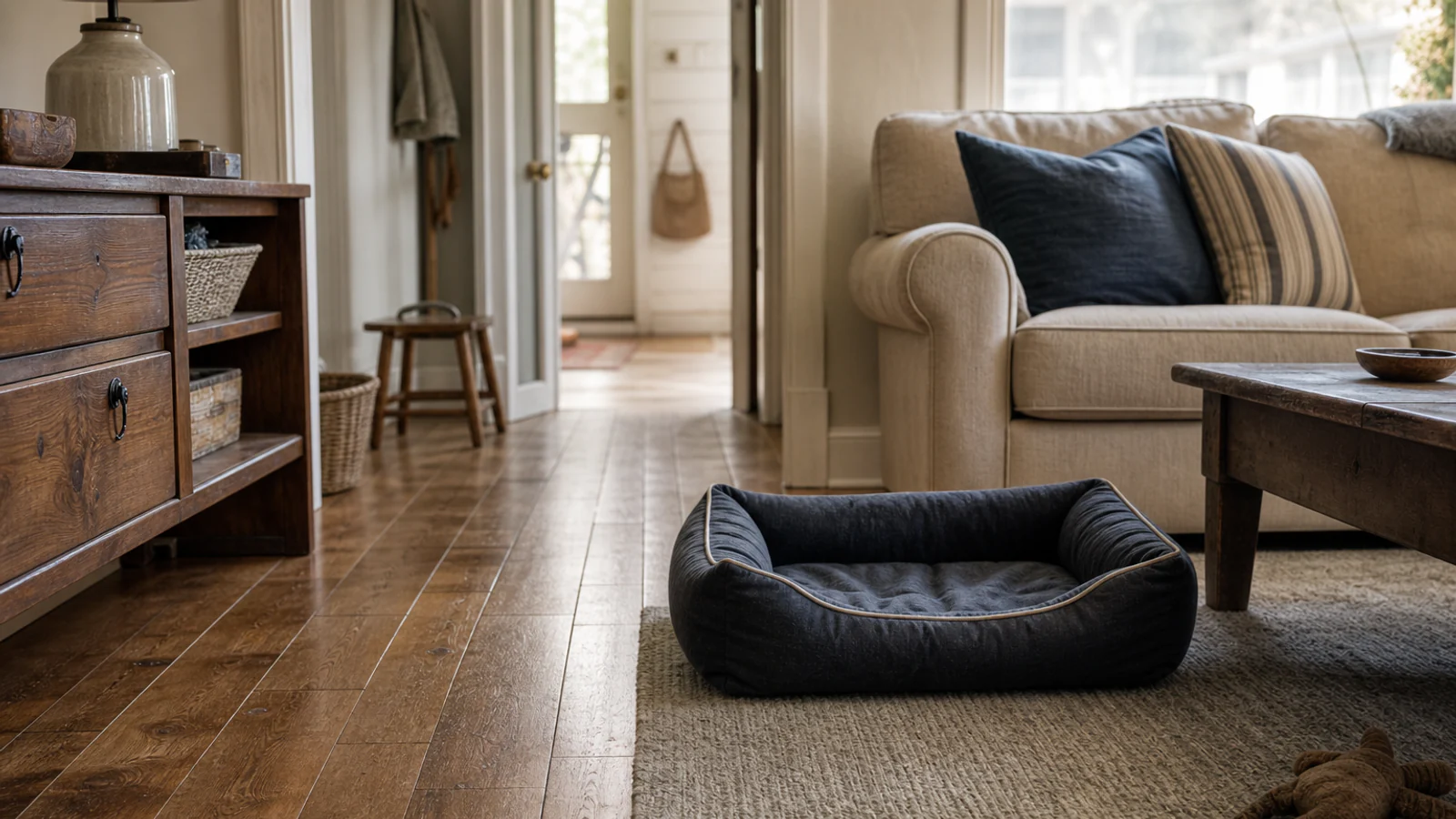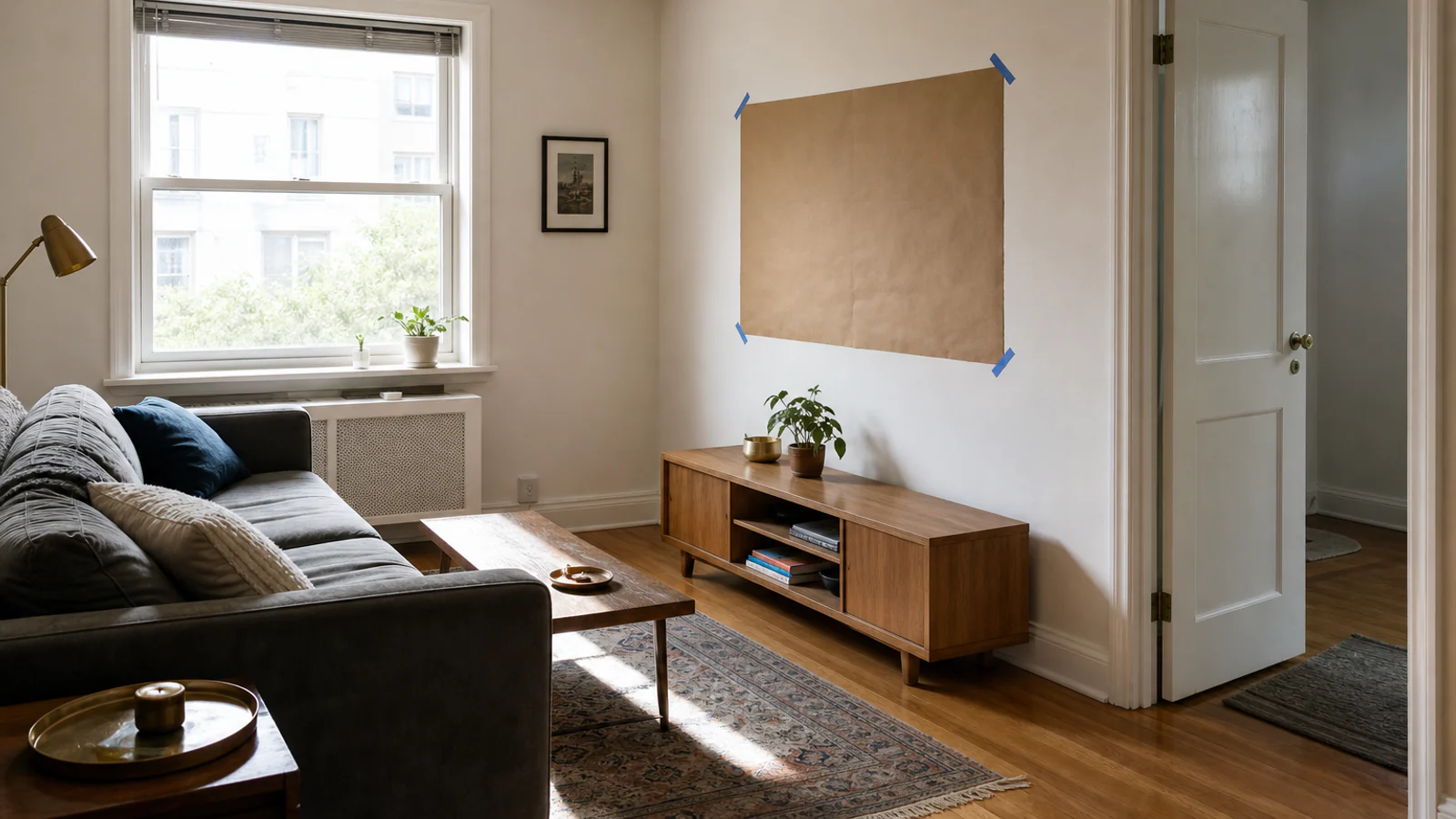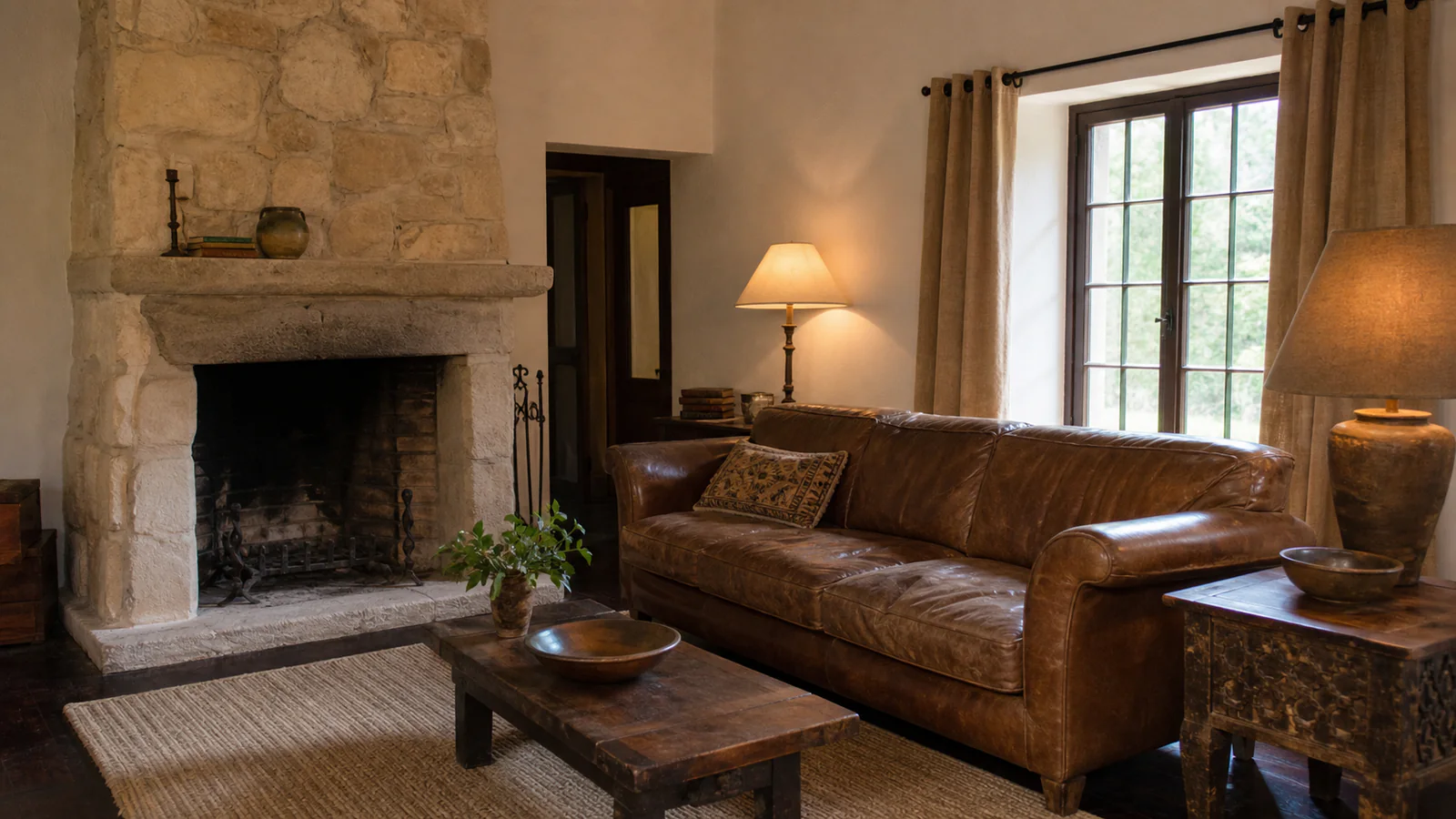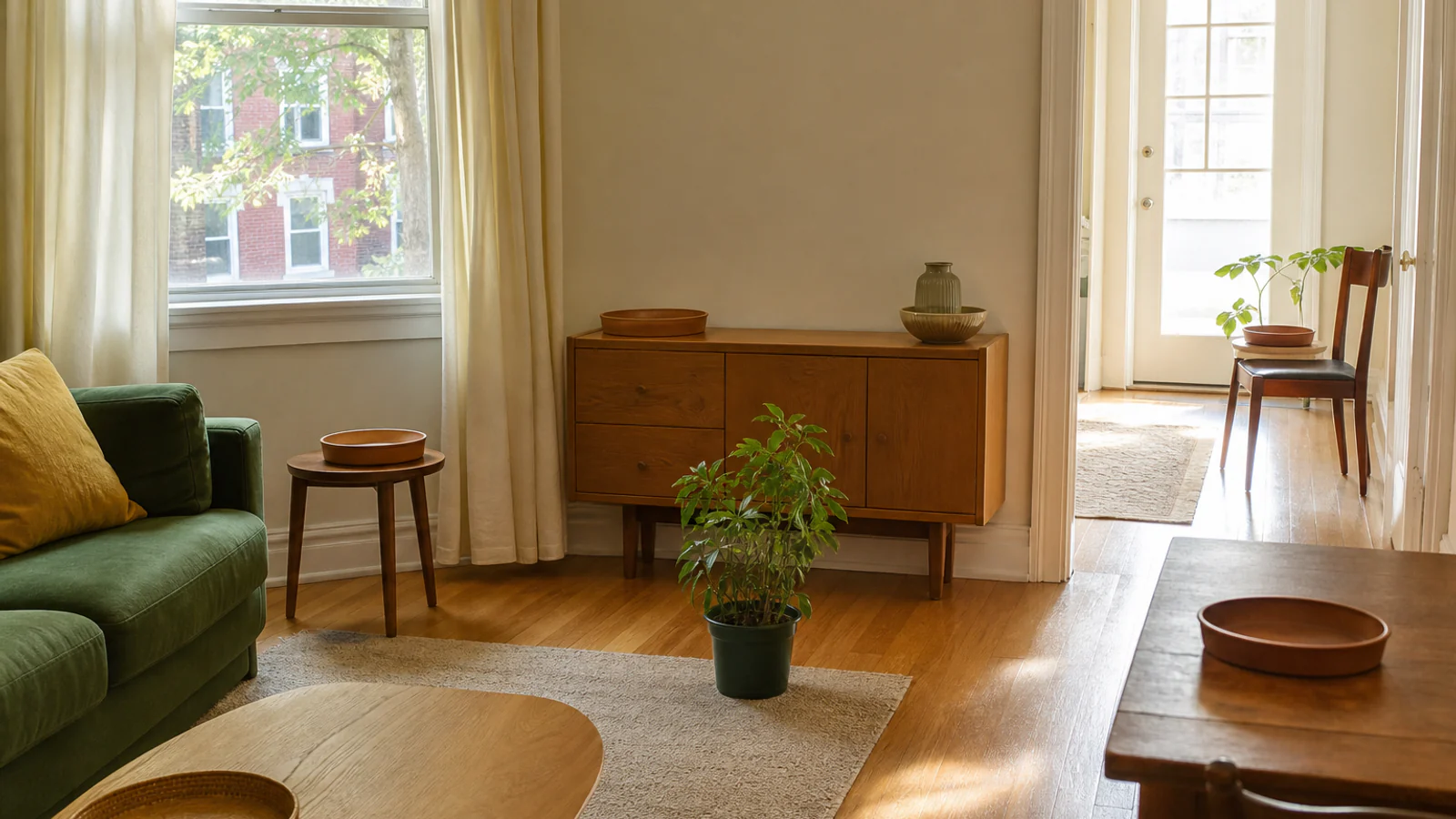
A field atlas for one ordinary room
A corner is not “low light” because it looks moody in one photograph. Watch how the room changes, then match an identified plant to the evidence.
This method is a short placement screen, not a diagnosis and not a substitute for plant-specific care. Seven days reveal household habits and recurring conflicts; they do not represent every season.
Answer first: identify the plant, mark three candidate positions, observe them morning, midday and late afternoon for one ordinary week, then compare the pattern with a credible plant-specific source. Reject any position that makes watering, drainage, windows, routes, pets or children unsafe or unrealistic—even when the light appears compatible.
“Put a snake plant in the dark corner” is the kind of advice that travels well on a graphic and poorly into a real room. It leaves out the plant’s exact identity, what “dark” means over time, the blind that closes every workday, the radiator beneath the sill, the dog brushing the pot, and the person who must carry it to a sink without dripping on a power strip.
A room name is not a growing condition. Two north-facing rooms can behave differently because of roof overhangs, neighbouring buildings, tree cover, window size and household habits. A bright bathroom may still be unsuitable for a particular identified plant. A living-room shelf may receive enough light but fail because the pot cannot be inspected or watered safely.
The work starts before styling. Make a small atlas of one room as it is used, not as it appears during a photo. The map will tell you where a cautious trial is reasonable, where the position conflicts with care, and when the most truthful answer is to leave the corner empty.
Page one: give the plant a reliable identity
Common names are convenient and ambiguous. They can refer to different plants, while individual plants may vary in appearance. Begin with the scientific name on a reliable nursery label or confirm it through a credible horticultural source. Do not identify toxicity from a generated image, a decorative label or visual resemblance alone.
If the identity remains uncertain, pause any pet- or child-access decision and keep the plant out of reach while you seek reliable identification. “It looks like a non-toxic variety” is not a safety method.
Visual 2 · plant passport
Record the plant before the room
- Identity
- Scientific name, common name and the source used to confirm both.
- Current setup
- Pot, drainage, saucer, support and current position.
- Light need
- The range described by a plant-specific extension, botanical or similarly credible source.
- Care cues
- Watering, temperature, humidity and inspection guidance from that source—not a universal calendar.
- Access boundary
- Exact species, actual pets or children, pot stability and a reliable toxicity check.
- Starting notes
- Visible condition before moving, recorded without diagnosing a cause.
University of Minnesota Extension recommends matching a plant’s requirements to the indoor light environment. That direction matters more than a list of “best plants for every room.” The reliable unit is an identified plant plus an observed position.
Avoid turning the passport into a medical chart. “Two yellow lower leaves are visible on the start date” is an observation. “The plant is hungry” is a diagnosis the map cannot support. Light, watering, root condition, pests, temperature and earlier stress can overlap.
Page two: plot only three candidate positions
Three is enough to compare and few enough to observe carefully. Choose positions that represent genuinely different conditions rather than three points on the same shelf. Draw the window, door, large obstruction, heater or air-conditioning outlet, walking route and the place where water is prepared or excess can drain.
Then add the details that a styled photograph edits out: the curtain normally closed at noon, the window handle, the glass door a dog uses, the shelf that requires a step stool, the electrical equipment below, the surface that would be damaged by a wet saucer.
Visual 3 · candidate-position map
A, B and C must differ for a reason
hall door
bookcase + shaded corner
seating and main walking route
west glazed door + pet route
A · near filtered morning light
B · interior shelf position
C · late sun near glass
- Draw: fixed geometry and obstructions.
- Mark: normal curtain and door behaviour.
- Trace: people, pets, watering and drainage.
- Do not infer: plant suitability yet.
A compass direction is context, not a verdict. An east window behind a deep balcony may provide a different pattern from an unobstructed east window. A west door may produce a short period of strong heat and direct light. A central shelf can look bright to a camera whose exposure automatically lifts the shadows while remaining a poor match for the plant.
Photograph the empty positions only as memory aids. The camera is not a calibrated light meter and its automatic exposure can make dark and bright scenes look deceptively similar.
Page three: keep the room’s real week
Observe each point in the morning, near midday and in late afternoon. Use times that make sense for the household rather than forcing an exact schedule. Record direct sun on the position, bright indirect light, diffuse or low light, full shadow, heat near glass, a normally closed blind, and unusual weather.
The ordinary behaviour is part of the environment. If the blind closes during video calls, log it closed. If an awning is extended each hot afternoon, include it. If workdays and weekends differ, mark the difference rather than averaging it away.
| Day | Morning | Midday | Late afternoon | Household / weather note |
|---|---|---|---|---|
| 1 | A / B / C | A / B / C | A / B / C | Blind, cloud, heat, door use |
| 2 | A / B / C | A / B / C | A / B / C | Blind, cloud, heat, door use |
| 3 | A / B / C | A / B / C | A / B / C | Blind, cloud, heat, door use |
| 4 | A / B / C | A / B / C | A / B / C | Blind, cloud, heat, door use |
| 5 | A / B / C | A / B / C | A / B / C | Blind, cloud, heat, door use |
| 6 | A / B / C | A / B / C | A / B / C | Blind, cloud, heat, door use |
| 7 | A / B / C | A / B / C | A / B / C | Blind, cloud, heat, door use |
Use consistent, descriptive language. “Direct sun reaches the empty position for part of the morning” is clearer than “great light.” “Position B remains in full shadow during all three checks” is more useful than “low-light corner.” If using a consumer light meter, follow its instructions and treat the readings as added observations, not a guarantee of growth.
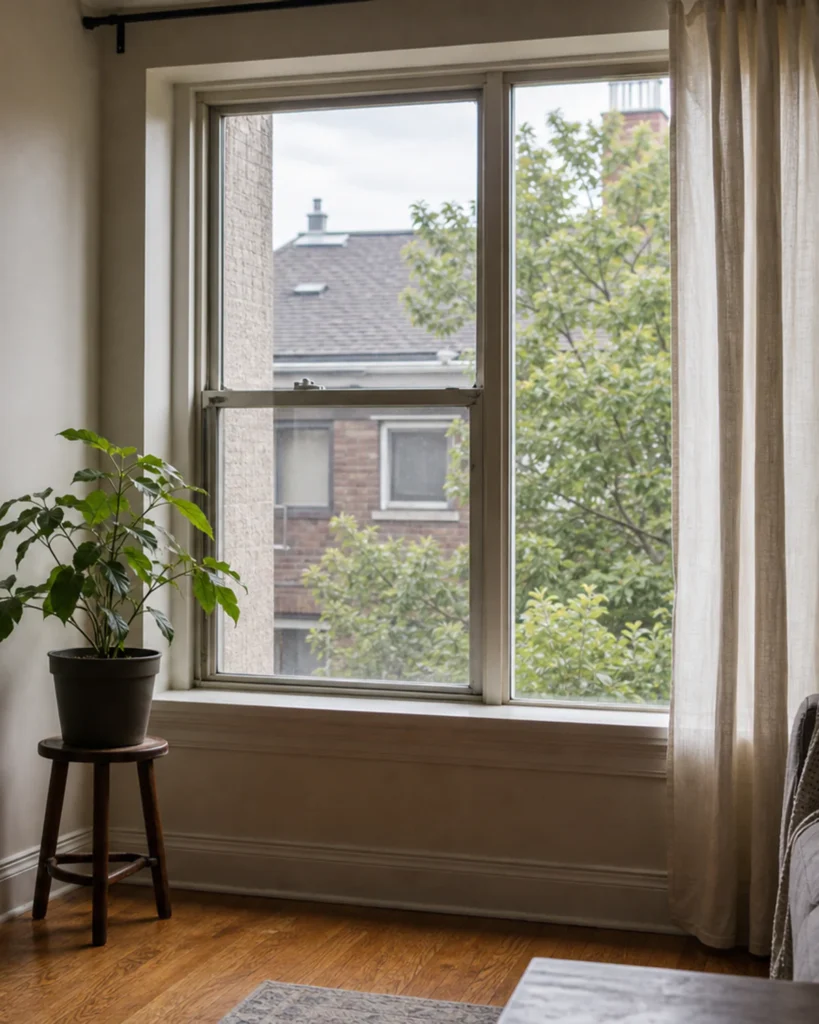
The visual shows why a single flattering image is incomplete. It does not assign a measured light category or prove that a plant belongs there.
Seven days are a snapshot. Clouds, leaf cover, daylight length, exterior shading and household routines change across seasons. If the week is unrepresentative, repeat it. Even after choosing a position, set a reminder to review the map when the season changes substantially.
Add a seasonal margin instead of pretending the map is permanent
The first map answers, “What happened during this ordinary week?” It does not answer, “What will happen here all year?” Exterior trees gain or lose leaves. The sun’s path changes. Heating and cooling begin. A balcony shade appears. The household closes curtains earlier or moves a desk that once reflected light into the corner.
Write one seasonal margin beside each candidate:
- Expected change: the known difference, such as a deciduous tree filling in or a radiator entering use.
- Review trigger: the date, weather shift or household change that should prompt another three-times-a-day check.
- Temporary plan: where the plant can be assessed without creating a new route, pet, temperature or care conflict.
- Stop sign: visible stress, pest evidence or uncertainty that needs a reliable horticultural source rather than another styling move.
You do not need a full seven-day project every month. Repeat enough observations to test the changed condition. If a winter week was mapped with bare trees, revisit when the canopy returns. If the position is near glass, reassess when strong seasonal heat or cold changes the environment. Keep the original notes so the comparison is between observations, not memory.
If a grow light enters the plan
A decorative lamp is not automatically a plant light, and adding a grow light does not erase the room map. The exact identified plant still needs documented guidance; the exact light needs current instructions for placement, operating time, heat, support and electrical use. Do not invent a universal distance or schedule from a photograph.
Map the light as another piece of equipment. Mark its base or mounting point, cord, switch or timer access, heat and glare for people using the room. Keep door and window operation clear. Follow all load, attachment and electrical directions, and obtain property permission where required. If the cable crosses the watering or walking route, the proposed position has created a new conflict rather than solved the old one.
The grow light should also survive ordinary behaviour. Will somebody switch it off during calls? Does its glare make the chair unpleasant? Can the plant be inspected and watered without moving the fitting? Record those answers in the household note column. A technically capable light that is never used as planned is not part of a dependable placement.
Page four: overlay the documented requirements
Only now compare the three patterns with the requirements for the identified plant. Use a current plant-specific extension, botanical garden or other credible horticultural source. Broad categories such as low, medium or high light can be a useful screen, but translate them cautiously; different sources may define or describe them differently.
University of Minnesota Extension notes that plants in low light generally grow more slowly and use less water, and describes possible signs associated with too little or too much light. Those signs are prompts to investigate, not a remote diagnosis. Do not promise that moving the plant will reverse damage or solve every problem.
| Position | Observed weekly pattern | Documented requirement | Care or access conflict | Decision |
|---|---|---|---|---|
| A | Describe; do not rate from memory. | Quote or paraphrase the identified plant’s reliable source. | Water, drain, heat, window, route, pet, child. | Trial / reject / more evidence |
| B | Describe; do not rate from memory. | Use the same source and criteria. | Water, drain, heat, window, route, pet, child. | Trial / reject / more evidence |
| C | Describe; do not rate from memory. | Use the same source and criteria. | Water, drain, heat, window, route, pet, child. | Trial / reject / more evidence |
The fourth column is as important as light. A ledge can match the documented light range and still fail because the pot blocks a window handle. A shelf may avoid direct sun yet require a risky lift for watering. A glazed door position may fit the plant but sit in a pet route or expose the pot to temperature extremes.
Do not resolve every conflict by buying hardware. If the shelf is the issue, first protect the books and access described in bookshelf styling that keeps books usable. An empty section may serve the room better than a plant that must be moved for every ordinary task.
Page five: draw the watering and inspection route
Plants are often placed where they photograph well and cared for somewhere else. The distance between those places creates the actual maintenance: carrying weight, spills, awkward saucers, skipped checks and wet surfaces.
Visual 7 · care-route diagram
Trace one complete care cycle
- Prepare water as the plant-specific guidance requires.
- Check the soil or other relevant care cue.
- Water at the appropriate place without crossing hazards.
- Allow and manage drainage as the setup requires.
- Empty or protect the saucer and nearby surface.
- Inspect leaves, stems, pot and nearby plants for changes.
Repeat the route mentally with the plant larger, the pot wet and the floor busy. A position that depends on unsafe lifting or dripping across electronics should be rejected or redesigned.
Watering should follow the identified plant’s needs and observed condition, not “every Saturday.” Light, temperature, potting medium, container and season can change how water is used. Keep the source’s care cues with the plant passport and update them only from reliable guidance.
UMN Extension also advises monitoring indoor plants for pests and isolating an affected plant. A tightly packed cluster can make inspection difficult and spread care across too many awkward routes. Editing the corner down can improve both maintenance and composition.
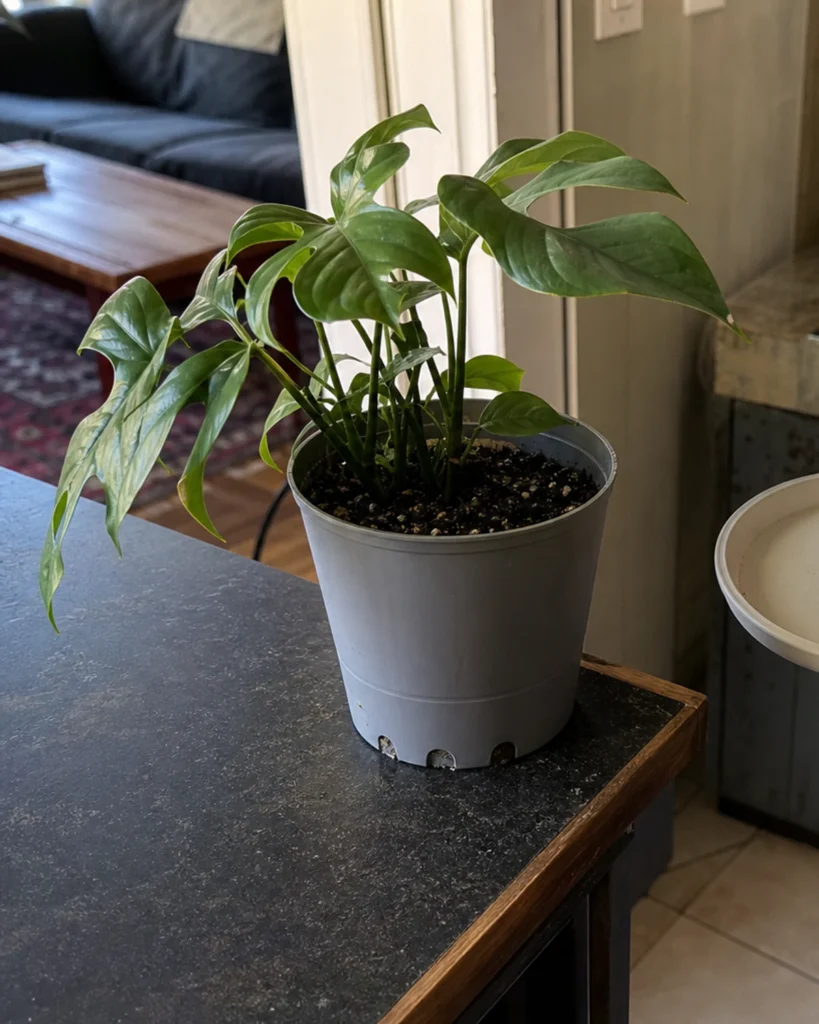
Page six: add the household safety overlay
If a dog, cat or child can reach the position, verify the exact species and the actual access path. The ASPCA’s toxic and non-toxic plant database is a useful reference for cats, dogs and horses, while warning that its list is not all-inclusive and that plant appearance can vary.
Do not diagnose toxicity from a photograph. Do not assume a plant is harmless because it is absent from one list. If exposure or illness is suspected, contact an appropriate veterinarian or poison service rather than waiting for a décor article to settle the question.
Visual 9 · household overlay
A position must pass all three layers
Identity
Scientific name confirmed from a reliable source; toxicity checked for the actual animal where relevant.
Physical access
Stable pot and stand; no blocked window or exit; hanging support follows exact load and installation instructions.
Care access
Water, drainage, fallen leaves, supports and any grow-light cords can be managed without creating another hazard.
Moving an unidentified plant higher is not a complete control. Leaves can fall, animals may climb and watering becomes harder. Resolve identity and access together.
Protect human circulation too. A planter should not narrow a door route or turn the corner of a sofa into a slalom. If the proposed stand affects movement, return to the small-living-room layout guide before decorating around it.
Worked atlas: three positions for one known plant
This example demonstrates the decision method without naming a species or inventing a universal distance. Imagine that a reliably identified plant’s credible source calls for medium to bright indirect light. The room offers an east window, a deep bookcase corner and a west glazed door.
Position A
Filtered morning, indirect later
The week records bright filtered mornings and indirect light later. The floor route is clear, the window handle remains usable and watering can happen nearby.
Decision: a cautious trial may be reasonable if the exact plant source and household safety layer agree.
Position B
Interior bookcase shadow
The position remains low during all three daily checks. It photographs as a beautiful green corner but falls below the source’s described preference.
Decision: reject for this plant. Use art, a useful lamp or welcome empty space instead.
Position C
Strong late sun near the dog route
The position receives direct late light and heat near glass. The dog brushes the stand on the way to the door.
Decision: reject or reassess; both exposure and access conflict require better evidence.
The map favours A for a cautious trial, not because east is a magic direction but because the observed pattern, documented requirement and care route align. The result could differ in another east-facing room. Obstructions, seasons and household behaviour matter.
Move one variable, then keep a change log
If the evidence supports a new position, follow plant-specific guidance for any transition, especially where light exposure changes. Record the move date and change one major variable at a time. A dramatic makeover that repots, relocates, fertilises and changes watering simultaneously makes later observation difficult.
Field-note tool
Record without diagnosing
Position and source-guided transition used.
What the room actually did after the move.
Soil or care cues, drainage and route friction.
New growth, colour, damage or pest signs—without assigning cause.
Observe for a period appropriate to the plant and season. If it declines, pests appear, or the care needs remain unclear, use a qualified local horticultural source. Do not promise that more light, less water or a new pot will solve an unidentified problem.
Style only after the position survives its trial. Repeat one planter material if that helps the room, vary leaf scale without crowding access, leave space for growth and protect the supporting surface. When colour becomes the next decision, the guide to a whole-room palette from one loved item can incorporate foliage and the planter without letting greenery consume every corner.
A room does not fail because it has an empty shelf. A plant does not need to be sacrificed to complete a composition. The next action is simply to mark A, B and C, then make the first morning observation before moving anything.
Official source notes and limits
- University of Minnesota Extension: Lighting for Indoor Plants supports matching plant requirements to the indoor light environment and the cautious descriptions of possible too-little or too-much-light signs.
- University of Minnesota Extension: Managing Insects on Indoor Plants supports regular inspection and isolating plants when pests are detected.
- ASPCA: Toxic and Non-Toxic Plants supports the exact-identity and pet-exposure boundary. Its database is not all-inclusive and does not replace veterinary advice.
- Any named plant in a final household plan also needs a current plant-specific extension, botanical-garden or equivalent credible source. This guide deliberately avoids universal watering calendars, window distances and recovery promises.
- Grow lights, timers, supports and related electrical products must follow their exact current manufacturer instructions, property rules and applicable local requirements. This guide does not prescribe a universal light distance, output or schedule.