Good living room lighting is not about making every corner equally bright. It is about putting the right kind of light where life happens: a gentle background glow for moving around, a focused pool beside the chair where you read, and a quieter highlight that gives the room depth after dark.
If your room feels flat, gloomy or strangely harsh at night, the problem may not be the paint colour or furniture. One bright ceiling fitting can produce plenty of light while still leaving faces shadowed, screens reflective and the edges of the room visually closed. Buying a stronger bulb often makes the centre brighter without solving any of those problems.
This guide shows how to build a layered lighting plan with the lamps and fittings you already own, then choose any missing pieces with more confidence. It explains lumens, colour temperature and colour rendering in plain language, includes flexible ideas for rentals and small rooms, and keeps electrical safety separate from decorating advice.
Living room lighting layers at a glance
| Layer | Its job | Useful examples | Common problem |
|---|---|---|---|
| Ambient | Comfortable overall visibility and safe movement | Ceiling fitting, shaded floor lamp, wall light or light bounced from a wall | Too bright in the centre and too dark at the edges |
| Task | Supports a specific activity without lighting the whole room | Reading lamp, desk lamp, adjustable wall light or directed floor lamp | The bulb is visible, the page is shadowed or the switch is out of reach |
| Accent | Adds depth and draws attention to something worth seeing | Picture light, shelf lamp, soft wall wash or light behind a plant | Too many tiny highlights make the room busy |
| Control | Lets the same room change between activities | Separate switches, compatible dimmers, smart lamps or simple lamp controls | Every light turns on together at one fixed brightness |
Start with a night-time lighting audit
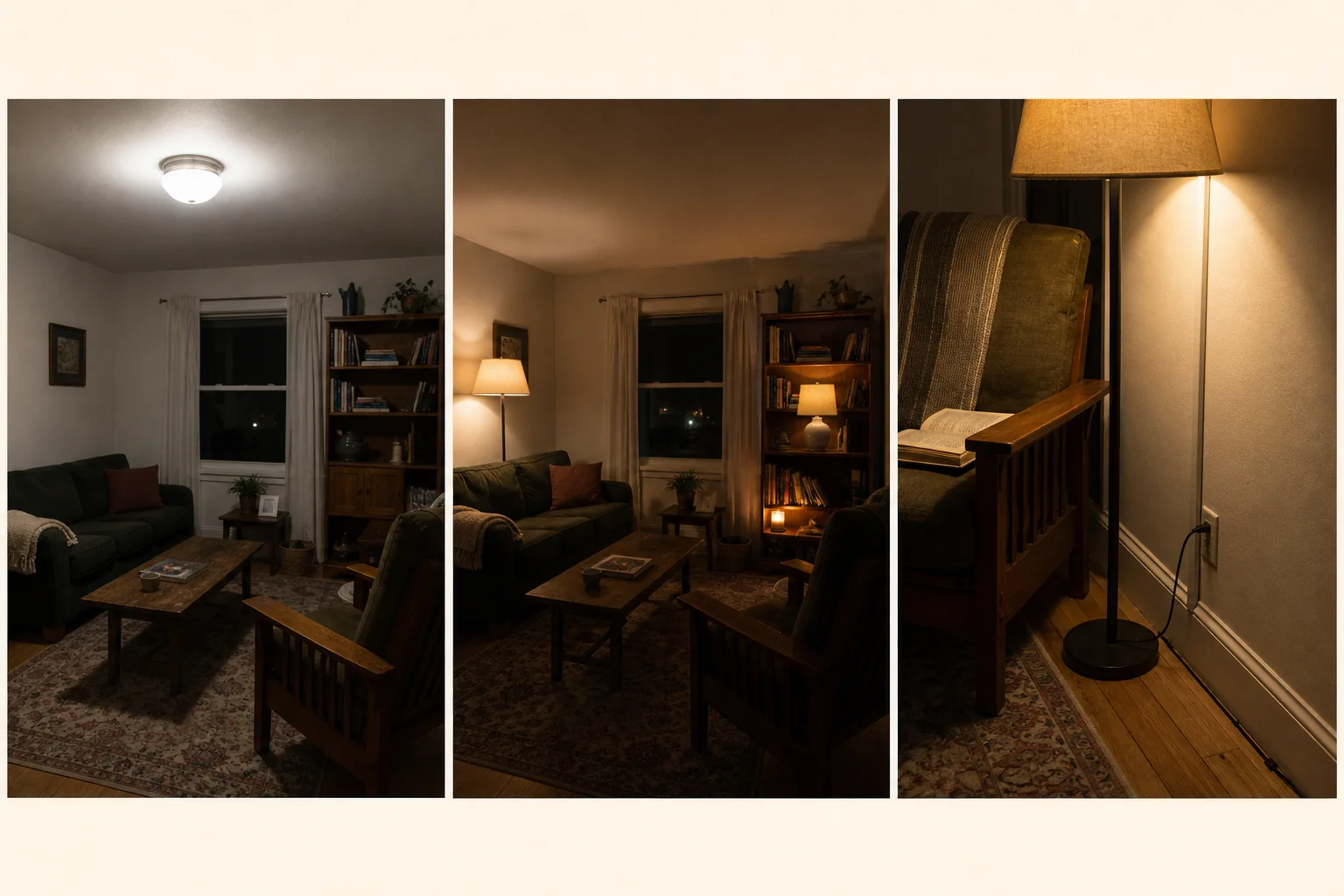
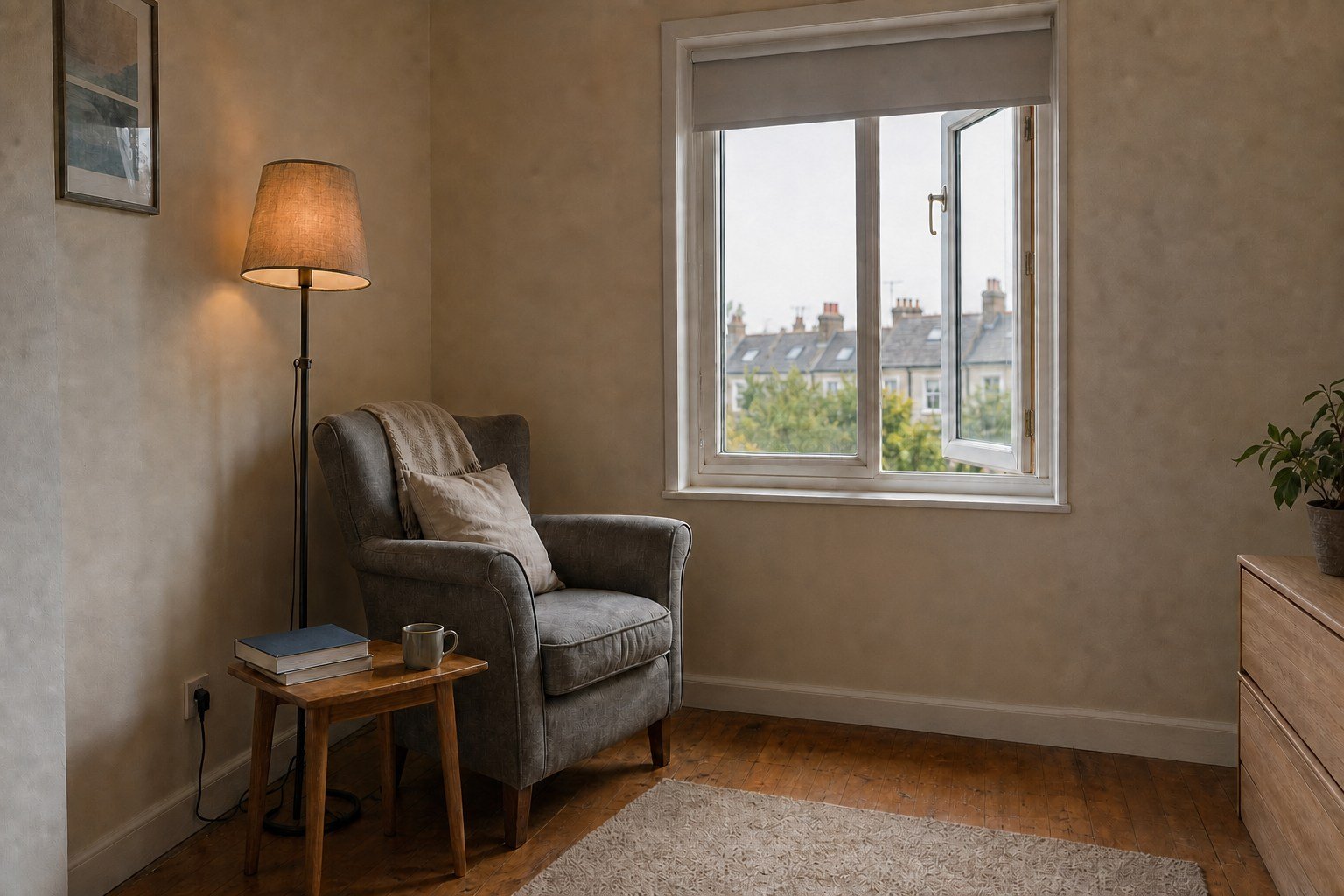
- 01Overhead only
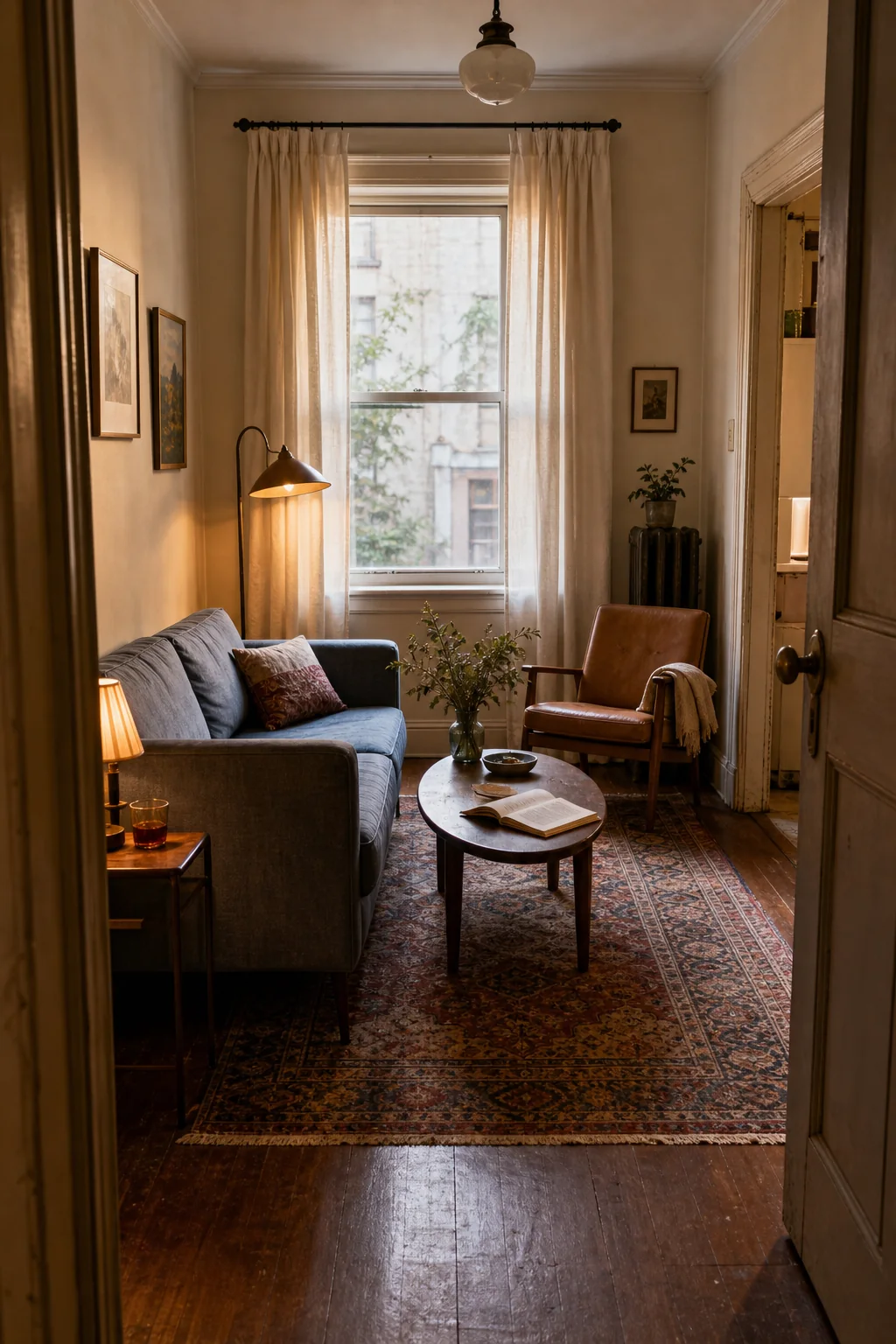
- 02Ambient + accent
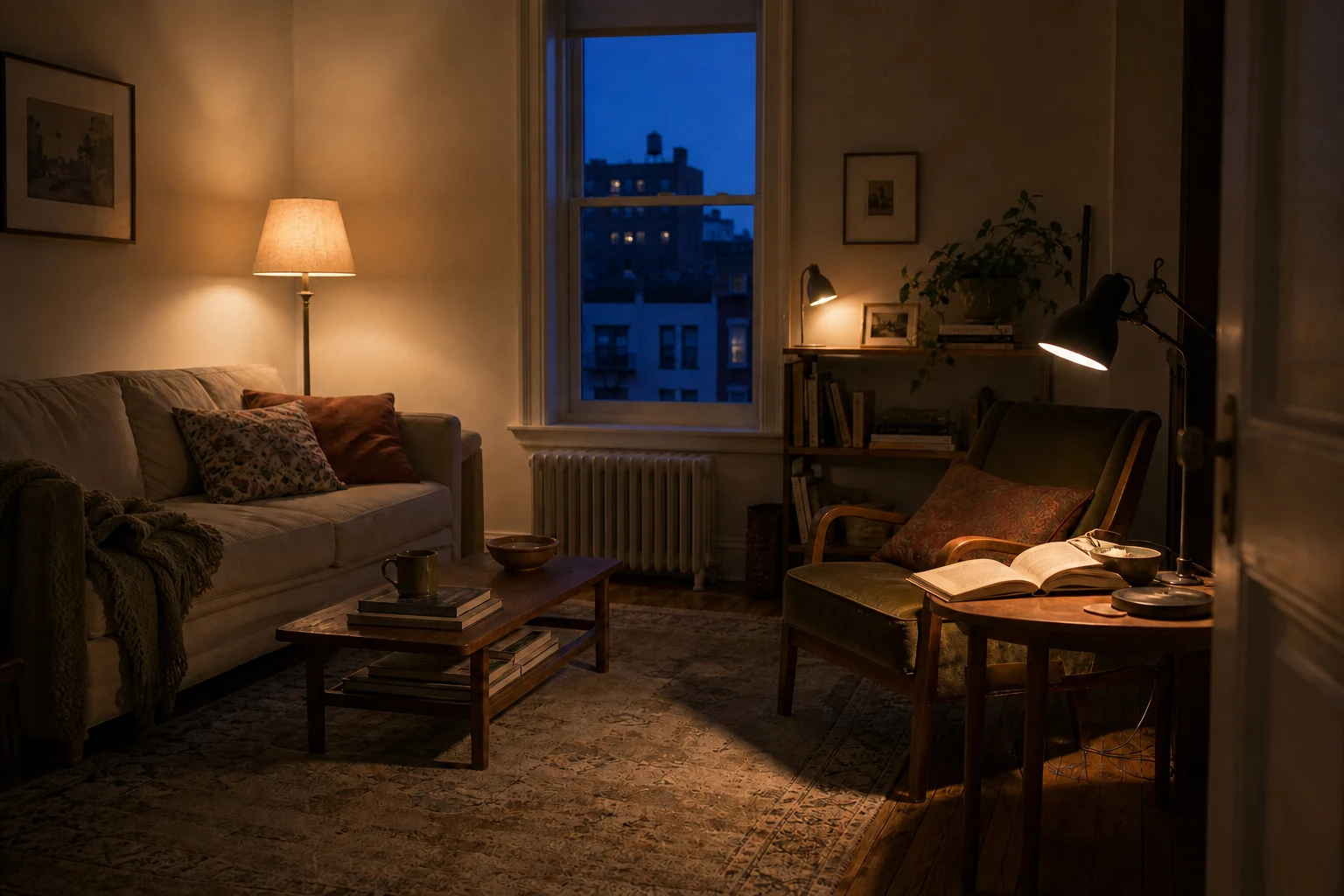
- 03Task light at the page
Do not plan lighting in daylight. Wait until the room is normally in use after dark, turn on the lights as you usually would, and sit in every important position. The goal is not to judge whether the room is stylish. It is to notice what your eyes and body are already telling you.
- Walk the route. Can you enter, reach a seat and move to the next doorway without crossing an unexpectedly dark patch?
- Use the room. Try reading, talking, watching a screen, playing, sewing or working—whatever genuinely happens here.
- Look for glare. Notice exposed bulbs, bright reflections in a television, shiny table or window, and light aimed into a seated person’s eyes.
- Look at faces. Strong light directly overhead can create deep eye and chin shadows. Light from the side or front often feels more comfortable for conversation.
- Check the edges. A room can feel smaller when the centre is bright and the perimeter disappears. One soft lamp in the darkest useful corner may restore the sense of depth.
- Check the controls. A light that requires climbing behind a sofa or walking across a dark room will not be used consistently.
Take one photograph from the doorway with the exposure left on automatic. A phone camera is not a lighting meter, but the picture often makes a glaring fitting, a black corner or an accidental mixture of yellow and blue-white bulbs easier to see.
Before buying anything, move an existing lamp into the weakest area and repeat the audit. This test separates a placement problem from a quantity problem.
Layer one: create a comfortable ambient base
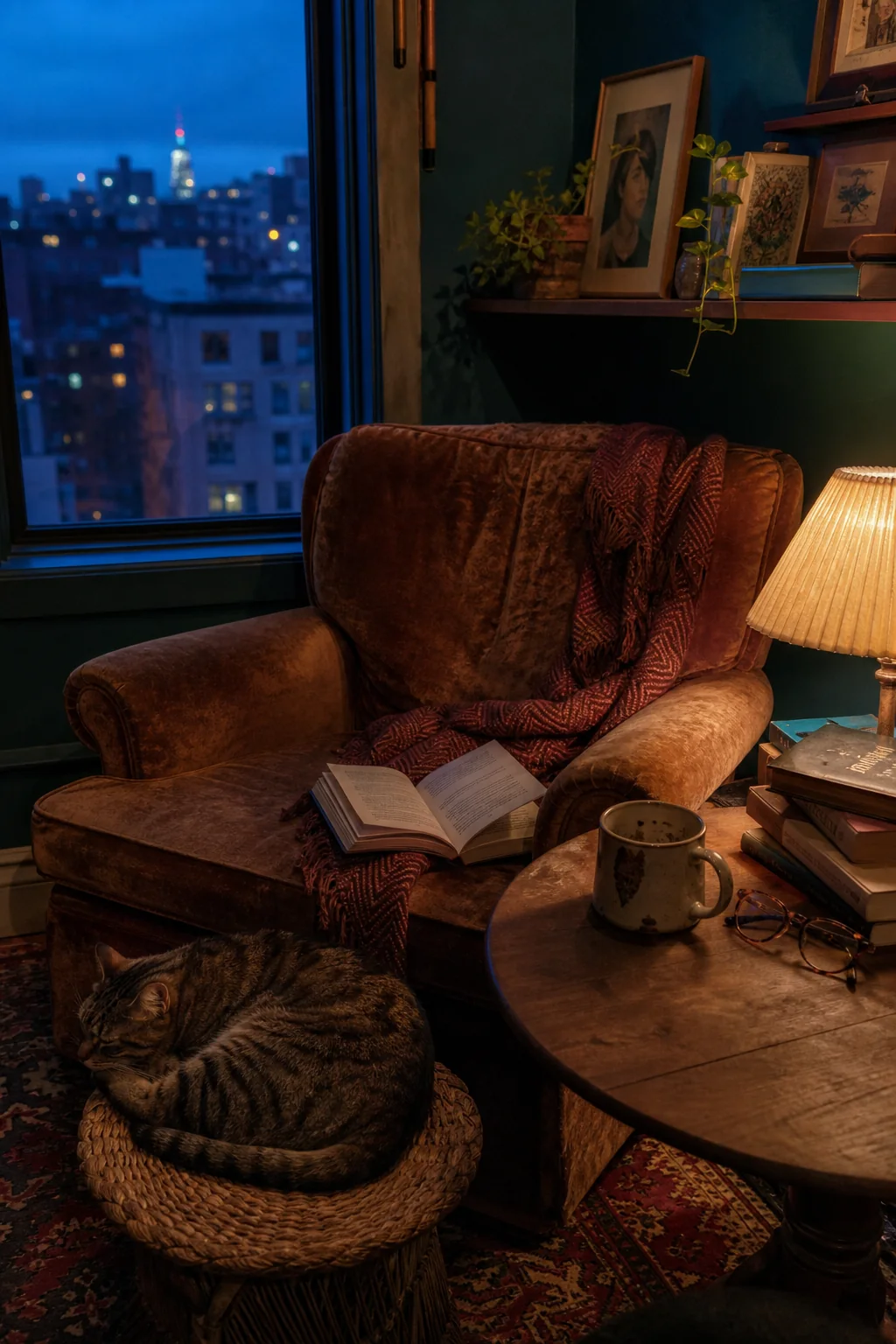
Ambient light is the background layer that lets people move around and recognise the room. It does not have to come from a ceiling fitting. In some living rooms, a shaded floor lamp that throws light upward and outward creates a more comfortable base than a bright pendant.
If you use the ceiling light, consider what the shade does. A translucent shade diffuses the bulb; an opaque metal shade sends most light in one direction; an exposed decorative bulb may look attractive while producing noticeable glare. The fitting’s shape matters as much as the bulb inside it.
A useful ambient layer usually reaches more than one surface. Light bouncing from a pale ceiling or wall becomes larger and softer than a bare point source. In a room with dark walls, timber panelling or a high ceiling, more light may be absorbed before it reaches the seating area. That is not a reason to repaint automatically; it is a reason to place light closer to where it is needed.
When the ceiling light is fixed and harsh
- Use it for cleaning or arrival, then switch to lamps for the evening.
- Check whether the fixture safely accepts a lower-output or dimmable bulb, following its label and manufacturer guidance.
- If a compatible dimmer is already installed, test a lower setting. Never assume an LED bulb and an existing dimmer will work together.
- Add one shaded lamp at seated height so faces are not lit only from above.
- Ask the property owner or a qualified electrician about a permanent change rather than altering fixed wiring yourself.
Layer two: put task light beside the task
Task light is precise. A reading lamp should illuminate the page without shining into the reader’s eyes or casting a hard shadow from their head and shoulder. A desk lamp should cover the working area without reflecting in a screen. A lamp used for crafts may need clearer colour rendering than a lamp used only for atmosphere.
Place the source slightly behind or beside the shoulder, then adjust it for the person who uses the seat. A right-handed reader may prefer the light arriving from the left so the writing hand does not create a shadow; the reverse may suit a left-handed person. This is a test, not a universal rule.
The bottom of an opaque lamp shade often works well around seated eye level or a little below it, because the shade hides the brightest part of the bulb while directing light downward. Exact height depends on the chair, table, lamp and user’s vision. Sit down before choosing a lamp rather than comparing floor-lamp heights in isolation.
Task lighting should be easy to operate from the activity position. A reachable switch, stable base and shade that can be directed safely are more valuable than a dramatic lamp that is awkward to use. If someone has reduced vision or mobility, plan around their actual reach, contrast and brightness needs; generic decorating measurements are not an accessibility assessment.
Layer three: use accent light to give the room depth
Evening sequence
One room needs different light at different hours.
Switch the scene, not every lamp.
- 18:00ArriveSoft ambient light shows the route.
- 20:00GatherPools of light hold conversation.
- 21:30ReadA shaded lamp serves the page.
- 23:00CloseOne low lamp slows the room.
Accent light is the quietest layer. It tells the eye that the room continues beyond the sofa and makes one or two details feel intentional. It might wash a textured wall, illuminate a bookshelf, sit behind a plant or reveal a piece of art.
The most convincing accents usually have a reason. Light the artwork you care about, the shelf you use or the material that becomes beautiful at night. Avoid placing a tiny light on every shelf. When everything is emphasised, nothing leads.
Keep delicate objects in mind. Sunlight and artificial light can affect some artworks, textiles and papers over time. Follow conservation guidance for anything valuable or light-sensitive, and avoid putting a hot lamp too close to fabric, foliage, paper or timber.
No-purchase test: place a small existing lamp on a low shelf for one evening. If that single pool changes the room, you have found a useful accent position. If it simply adds another visible bulb, try bouncing the light toward a wall instead.
How to read a bulb box: lumens, Kelvin and colour rendering
Bulb packaging can make a simple purchase feel technical. Three ideas do most of the useful work.
Lumens describe brightness; watts describe energy use
The U.S. Federal Trade Commission explains that lumens measure how much light a bulb produces, while watts describe the energy it uses. Modern bulbs can produce similar brightness with very different wattages, so replacing a bulb by wattage alone is unreliable. Compare lumens for brightness, then check the fixture’s permitted bulb type and maximum wattage.
Do not chase one universal lumen total for a living room. A pale, compact room with several shaded lamps distributes light differently from a large, dark room with one pendant. Start with the tasks and surfaces, use separate light sources, and choose bulbs that can be adjusted or exchanged if the result is uncomfortable.
Kelvin describes the apparent colour of white light
Correlated colour temperature, shown in Kelvin (K), describes whether a white light appears warmer and more yellow or cooler and more blue. The U.S. Department of Energy lists 2700K as a common warm appearance and 3000K as a soft warm appearance. Around 2700–3000K is therefore a practical starting range for a relaxed living room—not a rule. A household that works, crafts or prefers a crisper feeling may choose differently.
Consistency matters most where lights are seen together. A 2700K table lamp beside a 4000K floor lamp can look accidentally divided. Small differences may be pleasant, but test neighbouring bulbs at night before replacing every lamp. Product descriptions such as “warm white” are less precise than the Kelvin number.
Colour rendering affects how objects appear
Colour-rendering information describes how a light source affects the appearance of colours compared with a reference source. A higher colour-rendering score can be useful where art, textiles, food or skin tones matter, but one score does not describe every aspect of light quality. The Department of Energy cautions that colour temperature also compresses complex colour information into a single number.
If a rug looks dull or a paint colour strange at night, compare bulbs with better colour fidelity before changing the room. Buy one returnable bulb, test it in the actual fitting, and view the materials you care about. If the colours still feel disconnected once the light is consistent, use the one-loved-item palette method to reconnect the room without chasing isolated matches.
Where to place living room lights
Beside a sofa
Use a table or floor lamp close enough to serve the person sitting there. Keep the base outside the main walking line and make sure a shade or diffuser hides the bulb from normal seated views. If the sofa floats in the room, do not trail an ordinary cord across the floor to reach it; use a properly planned floor outlet or another safe position determined by a qualified electrician.
Between two chairs
One shared lamp can be efficient if both readers receive useful light. An adjustable two-headed lamp, a broad shaded lamp or a table lamp on a shared surface may work. Test both seats; a lamp centred geometrically can still fail one reader.
Near the television
Keep direct reflections off the screen and avoid a bright bare bulb immediately beside it. A soft source behind or to the side of the viewing area can reduce the visual contrast between a bright screen and a completely dark room. It should not shine toward the viewer or block ventilation around the equipment.
In the darkest corner
Do not light an empty corner merely to prove that it exists. Give the light a relationship: a chair, plant, artwork, bookcase or textured wall. A shaded lamp directed upward can make a low ceiling feel more open; a low lamp can make a tall, sparse corner feel grounded.
On shelves
Use lighting products designed for the location and follow clearance, ventilation and mounting instructions. Rechargeable lamps can be useful where outlets are limited, but they still need approved charging equipment and safe battery care. Do not hide an unsuitable extension lead behind books or soft furnishings.
How to reduce glare, harsh shadows and visual noise
Lamp-position study
Place light where the action is, not where the socket happens to be.
Use safe cords and stable surfaces while keeping walking routes clear.
- ConversationTwo low poolsLight faces without flattening the room.
- ReadingOver the shoulderAim at the page, shield the eye.
- TelevisionBeside, not behindReduce screen reflections.
- Hide the source. Use a shade, diffuser or direction that keeps the bulb outside ordinary sightlines.
- Increase the apparent size of the light. A shaded or bounced source generally feels softer than a visible point.
- Move light to the side. Light only from above can flatten a room and shadow faces.
- Control reflective surfaces. Reposition a lamp if it appears in the television, glazing, framed art or polished table.
- Avoid extreme contrast. A bright screen or reading lamp in an otherwise black room can be tiring; add a low ambient layer nearby.
- Repeat a rhythm. Two or three purposeful pools of light look calmer than many unrelated novelty lamps.
Glare sensitivity and lighting needs vary. Older eyes often need more useful light for tasks, while some people are highly sensitive to exposed sources or flicker. If lighting causes persistent discomfort, headaches or difficulty seeing, seek appropriate professional advice rather than assuming a styling adjustment will solve it.
Layered lighting for renters, small rooms and limited budgets
If you rent
Begin with plug-in table and floor lamps, furniture placement and compatible bulbs. A plug-in wall light can free a table if it is installed exactly as directed and the cable is routed safely. Ask permission before drilling, replacing a fixed fitting or changing a switch. Fixed electrical work belongs with a qualified person under the rules that apply where you live.
If the room is small
Choose fewer lights with clear jobs. One slim floor lamp can provide both ambient bounce and reading light if it has separate heads. A small lamp on a bookshelf can replace a side table. Keep bases out of narrow routes and avoid placing a light where a shade projects at head height.
For a complete layout check, see why one overhead light makes a small living room feel flatter and protect the walking route before adding floor-standing pieces.
If the budget is tight
- Move every existing lamp and test the new positions after dark.
- Clean dusty shades and bulbs only when switched off, cool and according to the product instructions.
- Replace one visibly mismatched or glaring bulb rather than buying a new fitting.
- Add a stable second-hand lamp only after checking its cord, plug, shade, socket and safety status. Do not use damaged electrical products.
- Use reflective wall colour, a mirror or a pale surface to redirect existing light—without aiming glare into a seat.
If several parts of the room feel wrong at once, work through the no-buy home reset before adding another fitting. It helps separate a real lighting gap from a layout, surface or placement problem.
Electrical and fire-safety boundaries
- Use the bulb type and wattage permitted by the fixture. The U.S. Consumer Product Safety Commission warns that an over-wattage bulb can overheat a fitting.
- Keep bulbs, shades and fittings clear of curtains, paper, clothing, upholstery and other combustible materials according to product instructions.
- Do not run electrical cords beneath rugs or furniture. CPSC guidance notes that covering or crushing a cord can damage it and create a fire or shock hazard.
- Keep cords out of walking routes and away from children and pets. Never staple, nail or pinch a cord to hide it.
- Do not overload an extension lead or power strip. Match the product to the electrical system and intended load, and do not use an extension cord as permanent household wiring.
- Stop using a lamp if the cord is frayed, the plug or socket is damaged, the fitting becomes unusually hot, the light flickers unexpectedly or there is a burning smell. Disconnect it safely and seek qualified advice.
- Check that bulbs, fixtures and dimmers are compatible. A bulb labelled dimmable may still have limitations with a particular control.
- Place lamps on stable surfaces where they cannot fall onto a sofa, bed or curtain.
A 30-minute living room lighting reset
- Minutes 0–5: switch everything on. Sit in each seat and note one dark route, one glare point and one task that lacks light.
- Minutes 5–10: switch off the ceiling light. Turn on the lamps alone. Decide whether the room lacks ambient coverage or simply needs a lamp moved.
- Minutes 10–15: move one light. Put it beside the activity or in the darkest useful edge. Check the view from seated eye level.
- Minutes 15–20: edit the bulbs. Record the lumens, Kelvin value, bulb type and dimming status of the main lights. Identify only the mismatch that genuinely bothers you.
- Minutes 20–25: make the cords safe. Remove cords from routes, uncover anything beneath a rug or furniture and unplug damaged equipment.
- Minutes 25–30: create three scenes. Decide which lights you use for arrival/cleaning, conversation/television and reading/quiet evenings. You may discover that you already own every layer you need.
Live with the reset for a week. Notice which switches people use, where a lamp gets nudged and whether the light supports the room after the novelty fades. Those observations are more valuable than a showroom photograph.
The buy-only-what-is-missing checklist
- Name the layer and task the new light must provide.
- Measure the available floor or surface area and the seated sightline.
- Check the outlet location and a safe cord route before choosing the position.
- Compare lumens for brightness and Kelvin for colour appearance.
- Check the fixture’s permitted bulb type, base, wattage and dimensions.
- Verify dimmer or smart-control compatibility if relevant.
- Choose a stable base and a shade that controls glare.
- Check access to the switch for the people who will use it.
- Read the installation, clearance, charging and care instructions.
- Keep the receipt until the lamp has been tested at night in the actual room.
Frequently asked questions
How many lamps should a living room have?
There is no ideal number. A compact room may work with a ceiling fitting, one reading lamp and one soft shelf light. A larger room with several activities may need more. Count jobs and dark zones, not matching pairs.
What colour temperature is best for a living room?
Around 2700–3000K is a useful starting range for a warm, relaxed appearance. Choose based on the room, tasks and personal comfort, and keep lights used together reasonably consistent. Test the actual bulb; “warm white” labels are not always identical across brands.
Should all living room lamps match?
No. They should feel related through proportion, material, colour or shade shape, but different tasks benefit from different forms. Consistent bulb colour and a repeated finish can connect lamps from different periods.
Can I use only floor and table lamps?
Yes, if they provide safe overall visibility and the light needed for each task. Make sure switches are reachable, bases are stable and cords do not cross routes. A fixed ceiling light may still be useful for cleaning or emergencies.
Why do LED bulbs flicker on my dimmer?
The bulb, driver and dimmer may be incompatible, or there may be an electrical fault. Check the manufacturers’ compatibility information. Stop using any fitting that behaves unusually, overheats, smells hot or appears damaged, and ask a qualified electrician when the cause is uncertain.
Where should a floor lamp go beside a sofa?
Close enough to light the activity, but outside the main route. Sit down and check whether the shade hides the bulb, the switch is reachable and the base is not where feet, children or pets will catch it.
How can I make a dark living room feel cosier without more clutter?
Light one useful edge, reduce glare from the centre, repeat a warm bulb colour and leave some shadow. One well-placed shaded lamp often creates more atmosphere than several decorative objects. The principles in Dealsmaster’s interior style guide can help connect the lighting to materials and colour already in the room.
The room does not need more light everywhere—it needs better light somewhere
Begin with real life after dark. Protect the route, light the chair where someone reads, soften the contrast around the screen and give the room one quiet edge that still feels present. Then stop and use it.
A layered room is not a showroom full of lamps. It is a room that can change pace: bright enough to find the missing toy, focused enough to read, and soft enough to let the evening arrive.
About the visuals in this guide
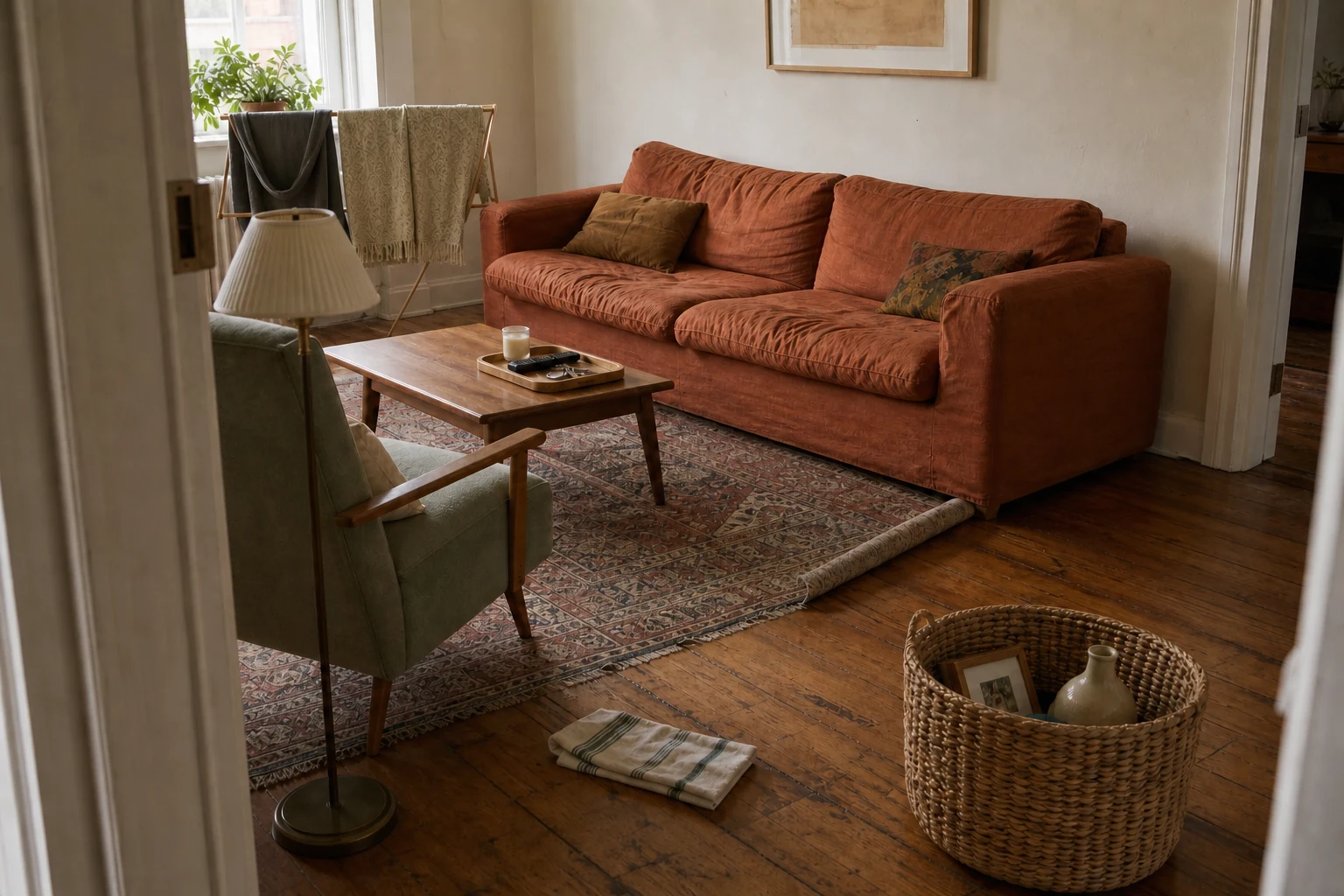
These are original Dealsmaster editorial illustrations produced with AI assistance for explanation and inspiration. They do not document a real household, tested installation, reader result, or professional inspection.
Sources and further guidance
Electrical systems, product standards and installation rules differ internationally. The following U.S. primary sources support the general bulb-language and safety guidance; follow the rules and product instructions that apply where you live.
- U.S. Federal Trade Commission: Shopping for Light Bulbs
- U.S. Department of Energy: Purchasing Energy-Efficient Light Bulbs
- U.S. Department of Energy: LED Basics
- ENERGY STAR: Downlight Colour, Performance and Compatibility Criteria
- U.S. Consumer Product Safety Commission: Home Electrical Safety Checklist
- U.S. Consumer Product Safety Commission: Extension Cords
Editorial note: Colour temperature and placement ranges in this guide are decorating starting points, not health, electrical or building requirements.