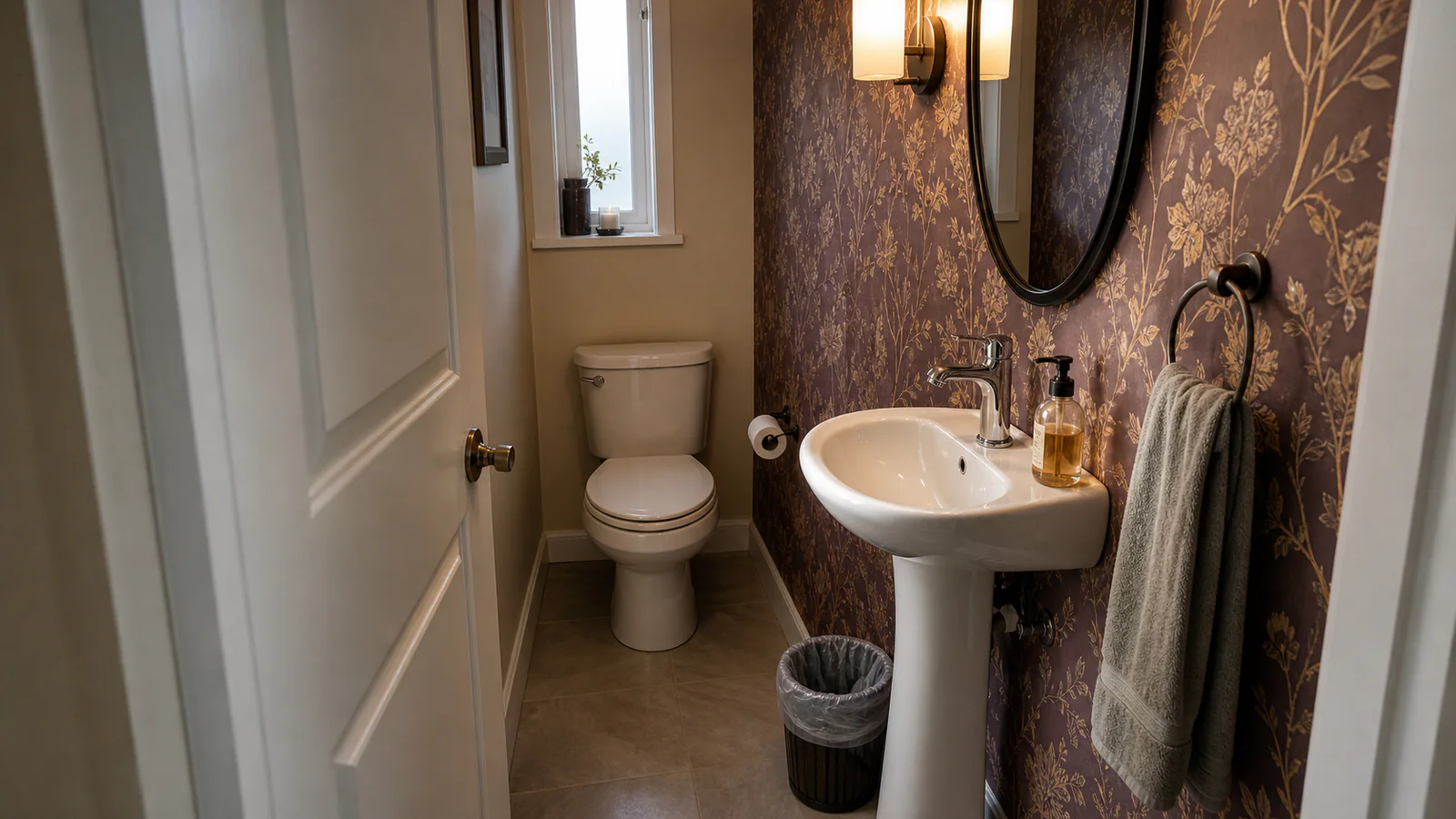
Material Edit · warmth without the costume
The room may not need to become white. It may need four slower moves: keep what is worth keeping, reveal it, quiet the repetition, then replace only what still fails.
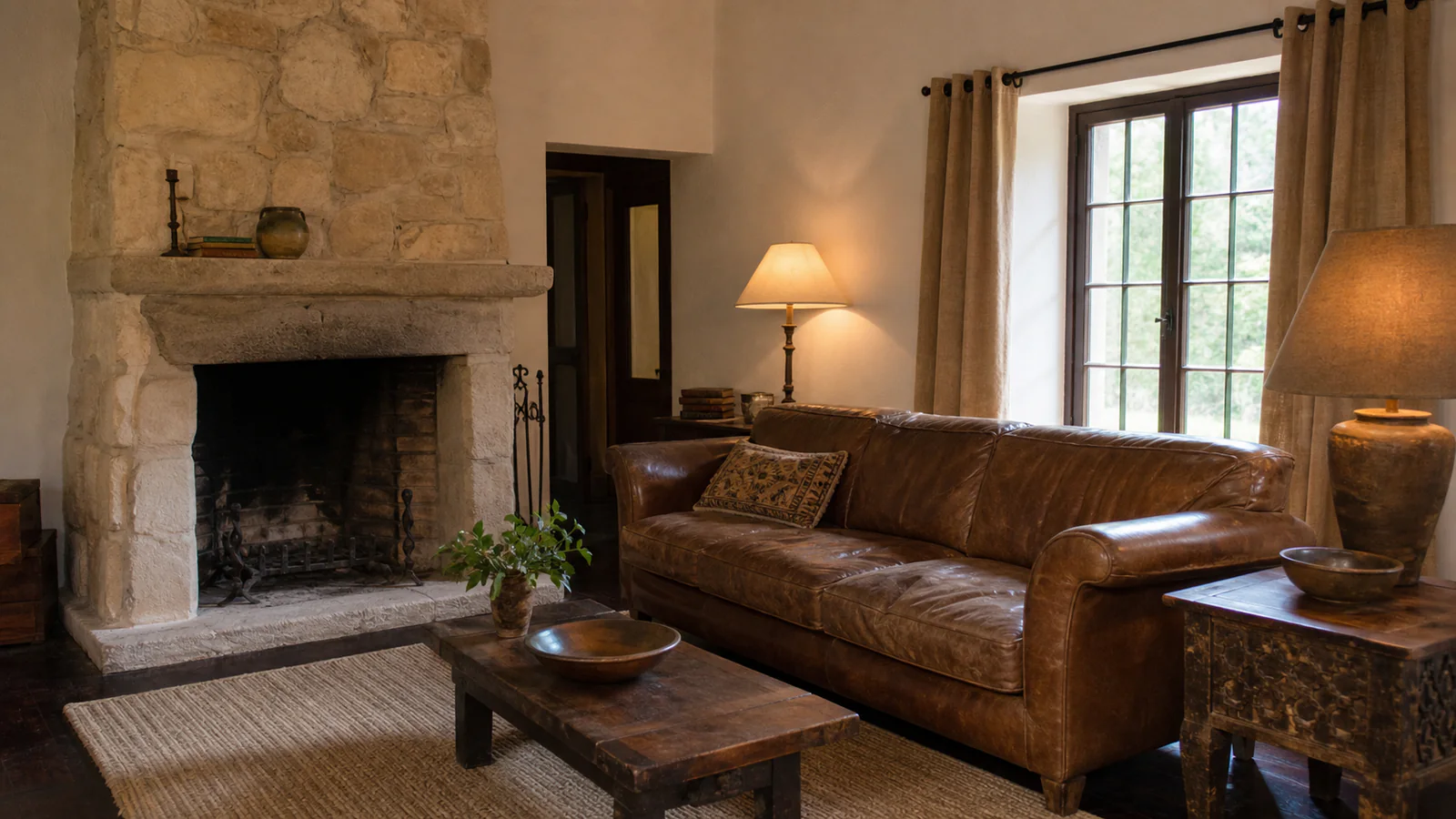
Stone fireplace. Dark timber. Brown leather. Scrollwork metal. Red-and-gold curtain. Faux-aged wall. Arched mirror. Tasselled cushion. Each element is speaking in an accent, and several are repeating the same sentence. The room does not necessarily have too much warmth. It has too many instructions about how to read that warmth.
The common internet cure is a white brush moved across every fixed surface. It produces a dramatic thumbnail because the second image is visibly different. It can also erase the material that gave the room depth, create a difficult-to-reverse maintenance decision and leave the same crowded furniture and lighting underneath.
Do not diagnose the room as “dated” and sentence every surface at once. Edit it in four passes: keep, reveal, quiet, replace.
This is an editorial method for an ordinary existing room—not historic-preservation advice, a product specification or a claim that Tuscan style is universally “back.” Use it because irreversible work deserves better evidence than fatigue with a label.
The room has too many accents, not too much history
“Tuscan” can be useful shorthand for a family of references: warm mineral colour, aged timber, textured plaster, stone, iron, generous furniture and Mediterranean imagery. It becomes less useful when it turns every object into evidence for the theme. A grape motif, scroll leg, red damask, urn, arch and faux crackle finish do not each get quieter because they share a label.
If you need vocabulary before editing, use the interior-style guide to identify broad references without turning the room into a fixed identity. Then stop naming the style for a moment. A fireplace can be a textured vertical mass. A leather sofa can be the room’s darkest soft shape. Curtains can be a large moving field of colour. That language lets you judge the room you have.
There is no shame in liking carved timber, rich red, ironwork or a mottled wall. The problem is not taste; it is hierarchy. When every item insists it is the main character, none of the material can be seen clearly.
Inventory without adjectives
Photograph one full angle in daylight. Do not tidy beyond moving personal information out of frame. Then write the room as nouns, separating fixed from movable:
Fixed or slow
Floor, fireplace surround, ceiling beams, doors, trim, built-ins, wall finish, hardwired light, window and any surface whose treatment is difficult to reverse.
Large but movable
Sofa, chairs, tables, rug, freestanding cabinet and floor lamps. Their scale matters, but they can be tested in new relationships.
Soft layers
Curtains, cushions, throws, shades and slipcovers. These can carry a great deal of theme repetition and are often the safest first edit.
Small signals
Art, urns, trays, figurines, greenery, books, candles and mantel objects. Small does not mean visually quiet when there are many.
Now add a question mark beside every material you cannot verify. “Stone-looking surround” is more honest than “limestone.” “Dark wood-like cabinet front” is safer than “solid walnut.” Veneer, laminate, tile, plaster, faux finish, natural stone and coated metal need different care. Appearance is not identification.
The National Park Service’s Preservation Brief 18 is written for historic-building rehabilitation, not for declaring a 2000s living room historic. Its useful transferable discipline is to identify significant interior spaces, features and finishes before planning radical change. Here we borrow only that order of operations: look closely before erasing.
The four-pass material board
Pass 1
Keep
- Sound, useful material
- Good proportion
- Comfort that still serves
- Difficult-to-recreate character
Pass 2
Reveal
- Remove competition
- Add tonal contrast
- Vary object scale
- Light the material, not the clutter
Pass 3
Quiet
- Reduce repeated signals
- Simplify one large soft layer
- Leave breathing room
- Keep the best example
Pass 4
Replace
- Failed function
- Damage routed correctly
- Unresolved obstruction
- Theme signal still crowding the room
Every element gets one current action. “Quiet” is not a polite form of “replace”; it may mean moving a carved chest away from three other dark pieces, removing the objects that trace every mantel ledge, or giving one patterned textile a plain neighbour.
Pass 1 · Keep
Find the expensive-to-recreate truth
Start with the elements whose substance, proportion or comfort would be costly or wasteful to recreate. A well-proportioned fireplace surround may be the strongest vertical element. A sound timber floor may hold the warm range the room needs. A brown leather sofa may be genuinely comfortable and improve with age. A built-in may fit the wall better than any replacement.
“Keep” does not mean “never alter.” It means the burden of proof moves to the proposed change. Before coating a fixed surface, ask:
- What is the verified material and existing finish?
- Is the condition cosmetic, functional, moisture-related or still unknown?
- What preparation, compatibility and cure does the exact product require?
- Can the desired change be tested with a movable layer first?
- What maintenance does the new finish create?
If the answer to the first question is unknown, stop there. A photograph, magnet, tap or internet comparison is not a full material assessment. Use the owner, records, manufacturer or an appropriate qualified person.
Pass 2 · Reveal
Subtraction needs contrast
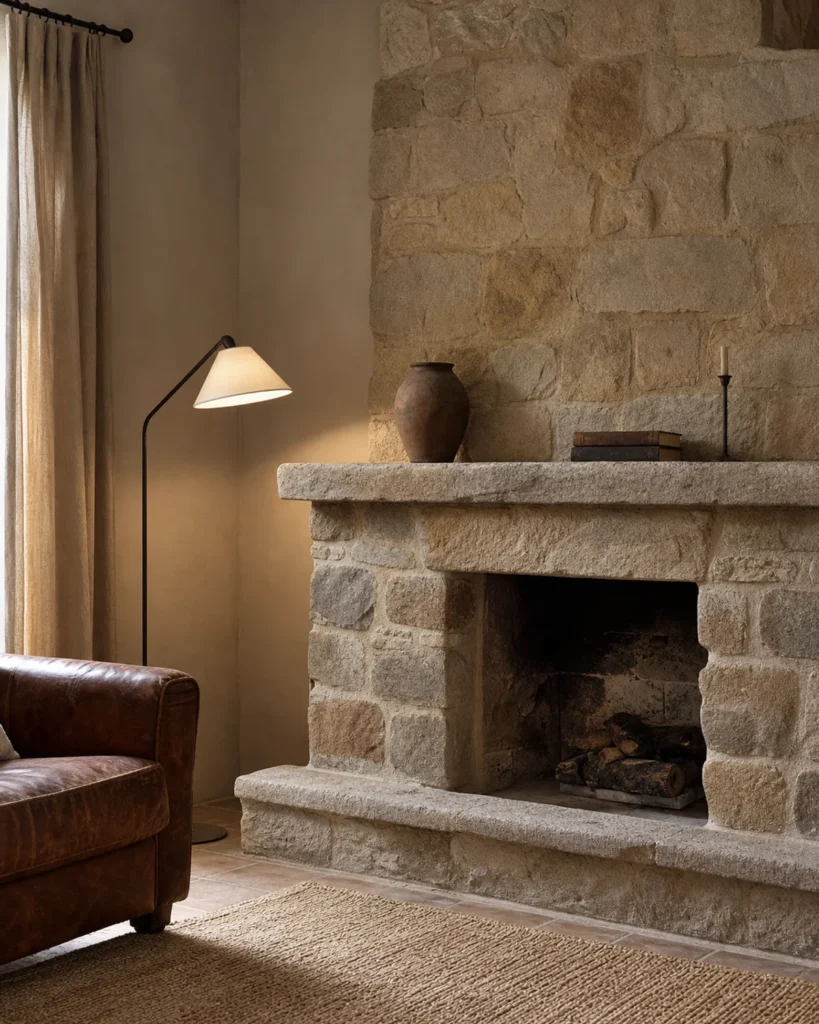
Removing objects is not the entire edit. A material becomes visible when its neighbour changes. Beige stone beside beige walls, tan rug, brown sofa, amber bulb and gold curtain can collapse into one heavy mid-tone. Painting the stone white is one way to create contrast; it is not the only way.
For a fireplace, test three reversible reveal moves before surface work:
Edit the ledge
Remove the object parade. Keep one composition with varied scale and open space around it.
Change the neighbour
Place a simpler, lighter textile or upholstery field nearby so the stone’s edge reads again.
Redirect the light
Use an appropriate existing or plug-in test to reveal texture without glare; electrical changes remain separate.
For dark timber, reduce the number of unrelated espresso finishes around it. One dark table beside a lighter woven chair can look deliberate. Five dark pieces with slightly different red undertones can become a single block. Reveal works by giving the keeper a distinct relationship, not by surrounding it with matching props.
Pass 3 · Quiet
Count the theme signals
“Dated” is too vague to edit. Repetition can be counted. Use the tally below for what is visible from your one camera angle. This is not a score of good or bad taste; it identifies where the same instruction appears several times.
A single iron scroll table can be graceful. The same curve in the chandelier, mirror, candleholder, console and curtain hardware turns grace into branding. If the room mixes several influences, support one dominant signal instead of repeating every influence at equal volume.
Soft layers give the largest reversible return. Replace or temporarily remove one swag, one dense rug or several small patterned cushions before touching the fireplace. Plain does not mean colourless: flax, clay, muted olive, tobacco, cream and warm charcoal can keep depth while resting the eye.
Choose the keeper by quality, scale and location
When a signal repeats, do not automatically keep the smallest or newest example. Keep the one with the best material presence, the most useful scale or the clearest relationship to the room. A substantial iron table may deserve to stay while three small scroll accessories leave. A single red-and-gold textile may hold the palette more convincingly than five timid cushions. An arched opening in the architecture does not need an arched mirror, lamp base and print beside it.
Move the possible keeper into open space and photograph it. If it becomes more convincing when the echoes disappear, the object was not the problem. If it still feels cumbersome, test its function and proportion before deciding to replace it. This small audition prevents a purge that removes personality along with repetition.
Pass 4 · Replace
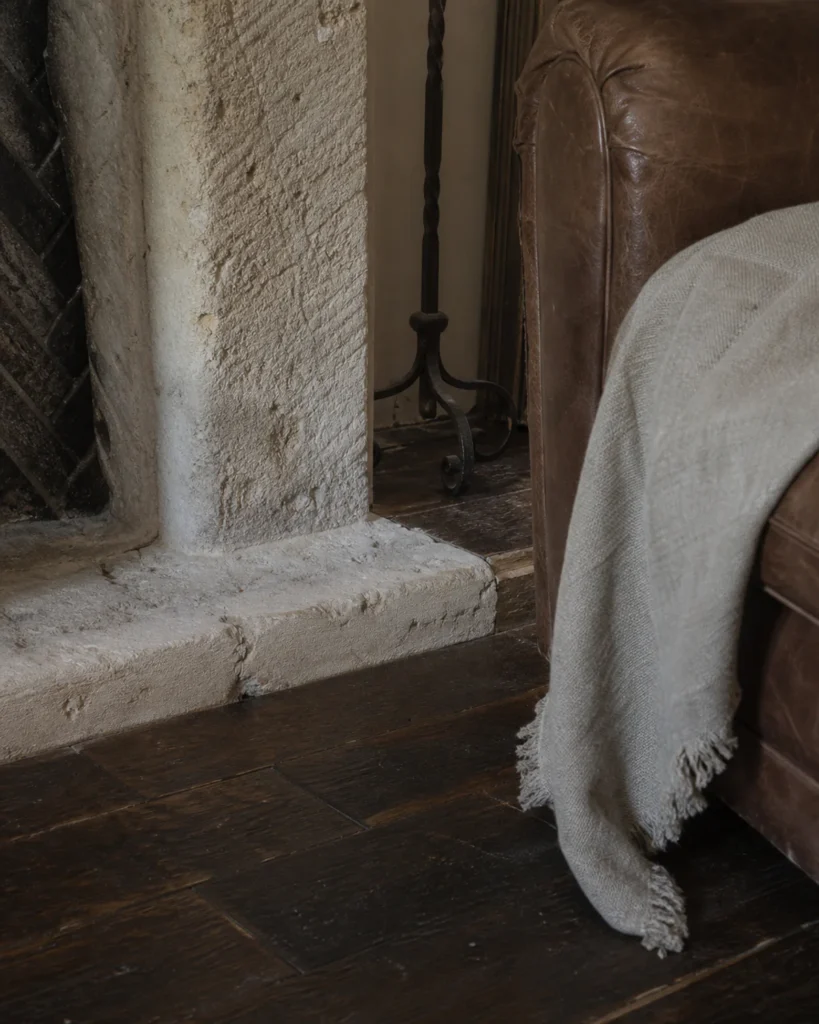
Move slowly at fixed surfaces
Replacement becomes reasonable when an element cannot perform its job, has damage routed to the appropriate response, obstructs operation or cleaning, creates persistent glare or darkness, or repeats a theme signal that still dominates after reversible edits. Even then, begin with the least entangled candidate.
A side table is less entangled than a floor. Curtains are less entangled than a fireplace surround. A lamp shade is less entangled than hardwired lighting. Sequence matters because each smaller change gives you new evidence about the larger one.
Indoor-air decisions also belong in the project plan. EPA’s remodeling guidance emphasizes pollutant-source control and effective ventilation; it does not approve a particular paint, stripper, cleaner or work method for this room. Product instructions, substrate, occupants and local requirements matter.
Worked room: one angle, four passes
Imagine one plausible living room: beige stone fireplace, dark timber floor, comfortable brown leather sofa, scrollwork coffee table, faux-gold wall finish and red patterned curtains. We keep the camera angle, architecture and daylight constant. This is an illustrated editorial sequence, not a documentary before-and-after.
Retain the sound fireplace surround, floor and sofa. Mark the wall finish as unknown until identified. Nothing is painted.
Clear the mantel object line. Move one existing lamp so the fireplace texture reads. Test a quieter rug relationship.
Remove the layered red curtain temporarily. Keep one patterned cushion; replace the cluster with plain warm textiles already owned or borrowed for testing.
Only after the first three passes, decide whether the scrollwork coffee table still repeats too much or fails circulation. A simpler form becomes one possible replacement.
The sequence can end after Quiet. A successful edit is not required to produce a purchase. Use the no-buy reset to test subtraction and rearrangement before replacing, then photograph the exact angle again.
Warm neutrals after white
White is a colour family, not a certificate of modernity. If the wall still needs change after the reversible pass and the surface is understood, derive the new relationship from a fixed material you value. Look for the quieter note inside the stone, floor, leather or timber rather than reaching for the palest chip.
Light-medium, greyed beige; useful beside redder timber.
Deeper brown-grey; can bridge stone and leather without matching either.
Light warm tan; keeps brightness without a sharp white contrast.
Muted red-orange earth; better as a controlled field than a repeated accent.
Low-saturation green-grey; separates warm stone from red textiles.
These names are relationships, not purchasable specifications. Screens do not show the room’s light or the product’s finish. Make large movable samples using the method the paint maker permits, place them vertically beside the fixed material, and observe morning, afternoon and evening. Build the wider palette from one fixed material or object you already value, not from five disconnected chips.
Compare relationships, not isolated chips
For each candidate, make a small relationship set: wall sample, one fixed-material photograph taken in neutral daylight, one curtain or upholstery sample, and a plain white card used only as a visual reference. Write what changes: “stone looks clearer,” “floor turns redder,” “leather loses contrast,” “evening lamp makes the sample yellow.” Those observations are more transferable than “love it” or “too beige.”
Do not chase a sample that makes every existing element match. A good wall colour can separate stone from timber and still allow the sofa to be darker. The room needs hierarchy, not a perfect blend.
Lighting may be the missing edit
A warm room can feel heavy because its corners disappear while one ceiling fitting glares. Before judging colour, map the light jobs: overall orientation, reading or conversation, material reveal and low evening light. A fireplace texture may need a modest directional layer; a dark sofa may need readable contrast behind it; a carved table may need less amber, not more ornament.
Test with existing and suitable plug-in products where appropriate, following their instructions and keeping cords out of routes. Electrical installation is a separate qualified decision. The layered-lighting guide helps separate ambient, task and accent jobs so every lamp is not asked to cast the same warm pool.
Photograph the original angle in morning and evening after the lighting test. If the stone and timber now read as distinct materials, the wall may need less change than you thought.
The no-paint and renter pass
If fixed surfaces cannot change, edit the layers that touch them visually:
- remove one layer of window treatment and observe the room for a week;
- move art so it has open wall around it instead of filling every arch;
- group small objects by material or use rather than “Tuscan” identity;
- use one lighter or quieter textile beside the darkest furniture;
- change lamp shade or location only within the exact product and property limits;
- repeat one fixed warm note in a cleaner, simpler form.
“Removable” products are not guaranteed damage-free. Check lease or owner permission, substrate, product suitability and removal instructions. A no-paint plan succeeds when the fixed room feels intentional—not when temporary products imitate renovation.
Pause shopping for one full edit cycle
For seven days, place possible replacements on a written list instead of in a basket. Each item must name the problem it solves: “plain curtain restores daylight,” “medium-tone table separates the dark floor and sofa,” “larger lamp provides the missing reading task.” If the problem disappears after subtraction, delete the purchase. If two proposed products solve the same issue, choose neither until the room shows which function is actually missing.
This pause is not a rule against buying. Replacement remains part of the fourth pass. It simply keeps shopping from re-filling the visual space before the room has had time to show its stronger materials.
Printable one-room material edit
Remove one repeated signal, then stop
Choose the second-best scroll, tassel, faux-aged accessory, red-and-gold pattern or overfilled ledge—not the room’s strongest material. Remove it for seven days. Photograph the exact angle in morning and evening. If the stone, timber or leather is easier to see, you have evidence for the next quiet edit. Do that before buying paint.
Warmth was never the problem. It needed room to be seen.
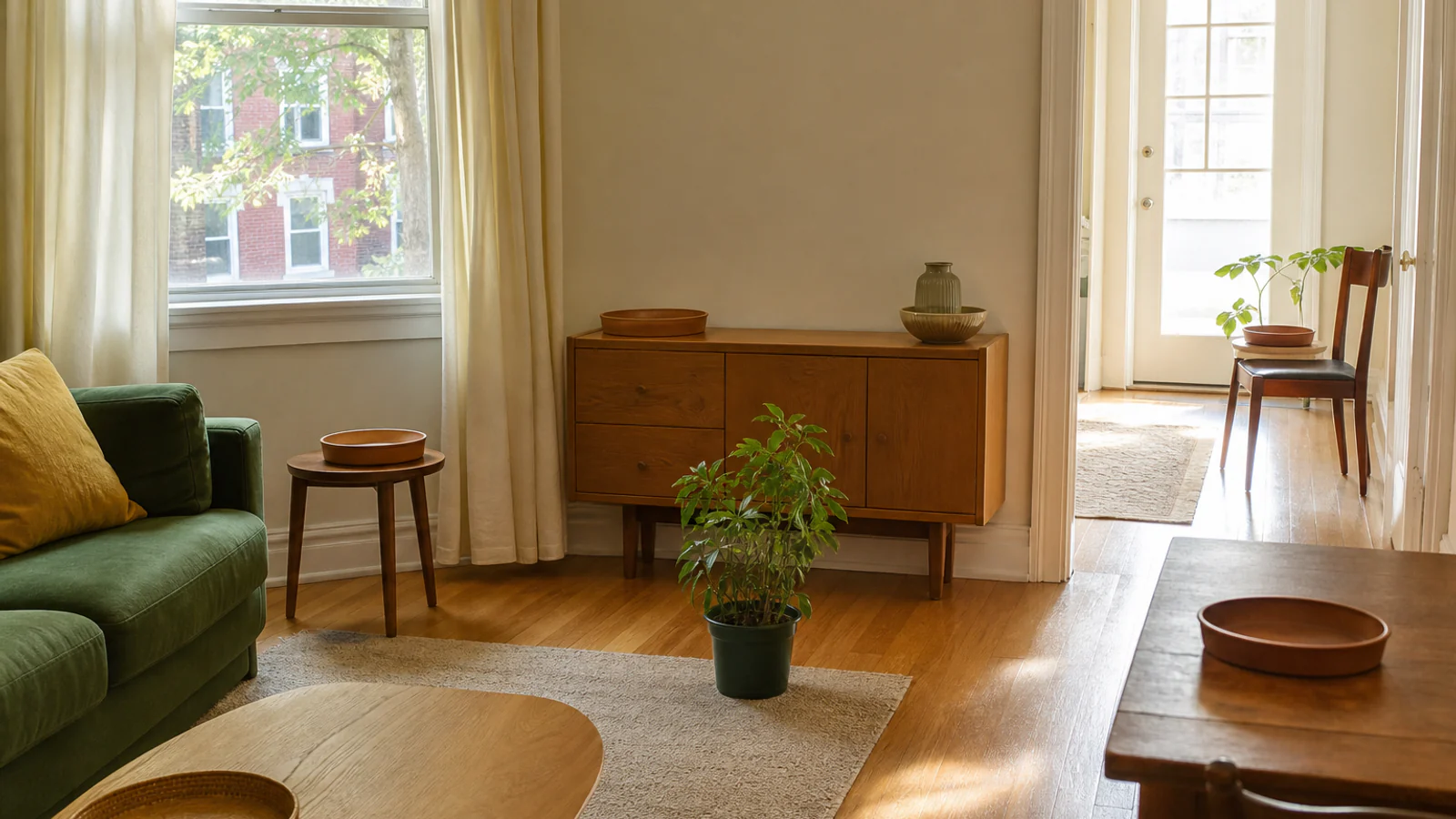
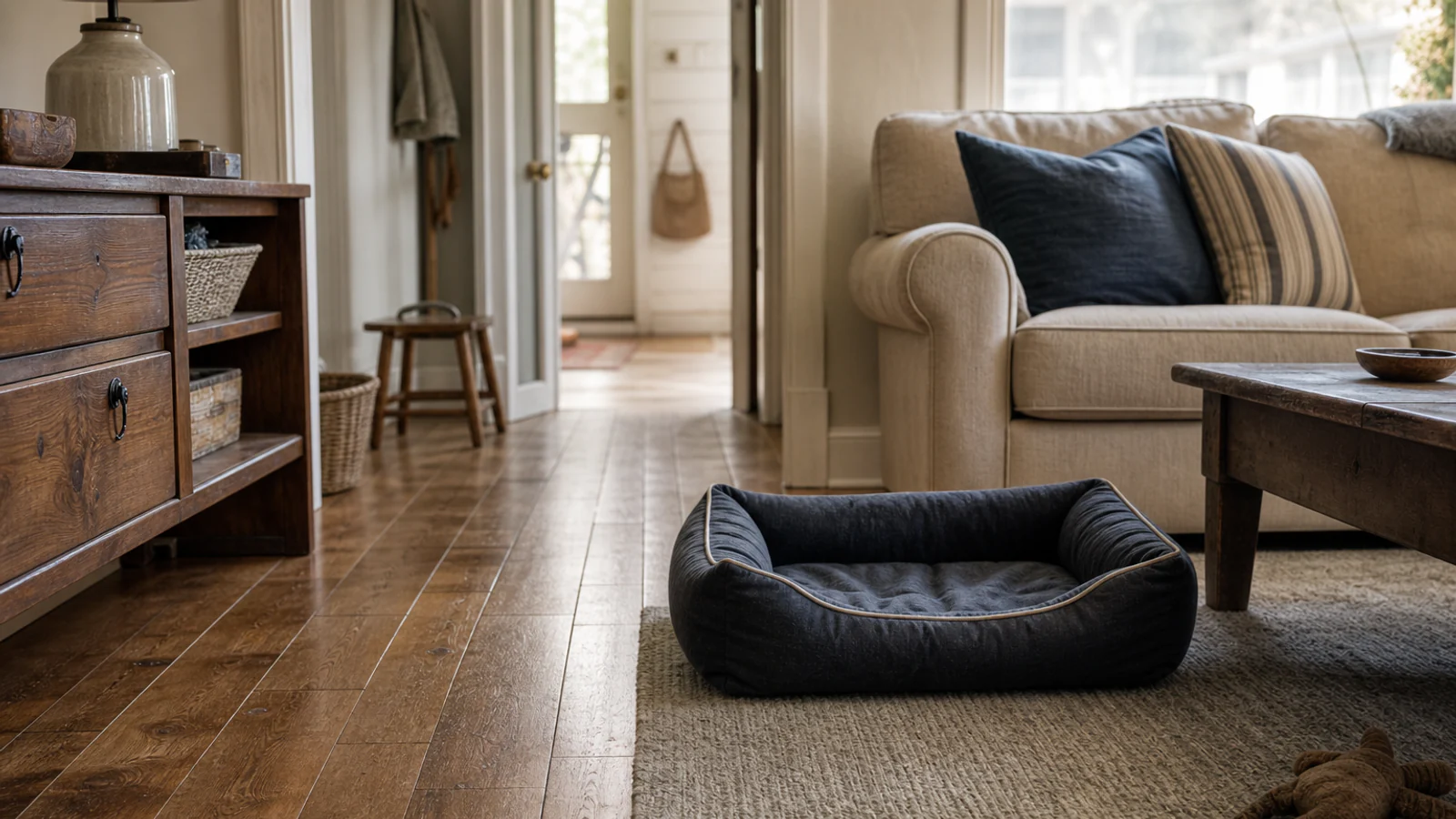
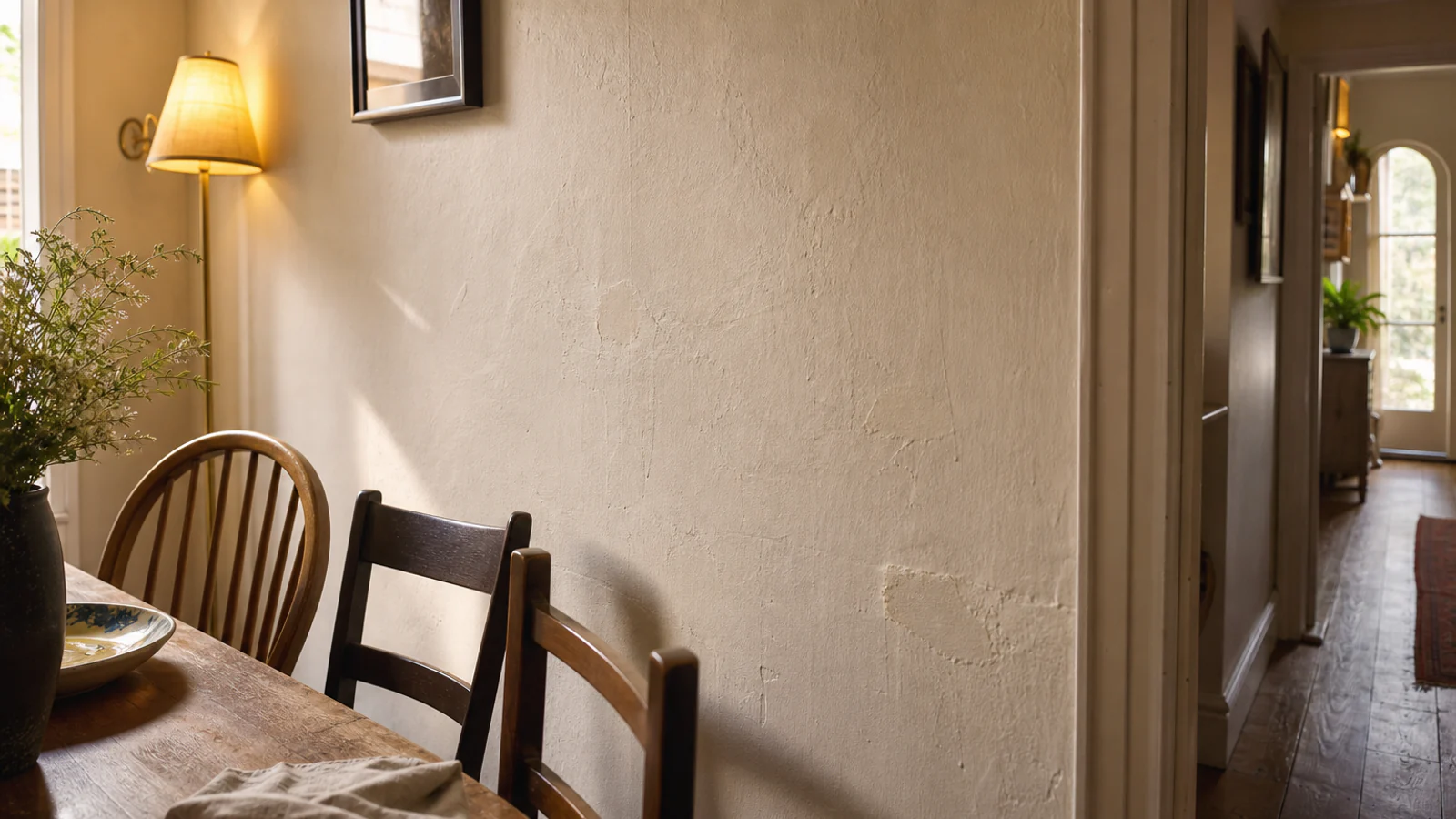
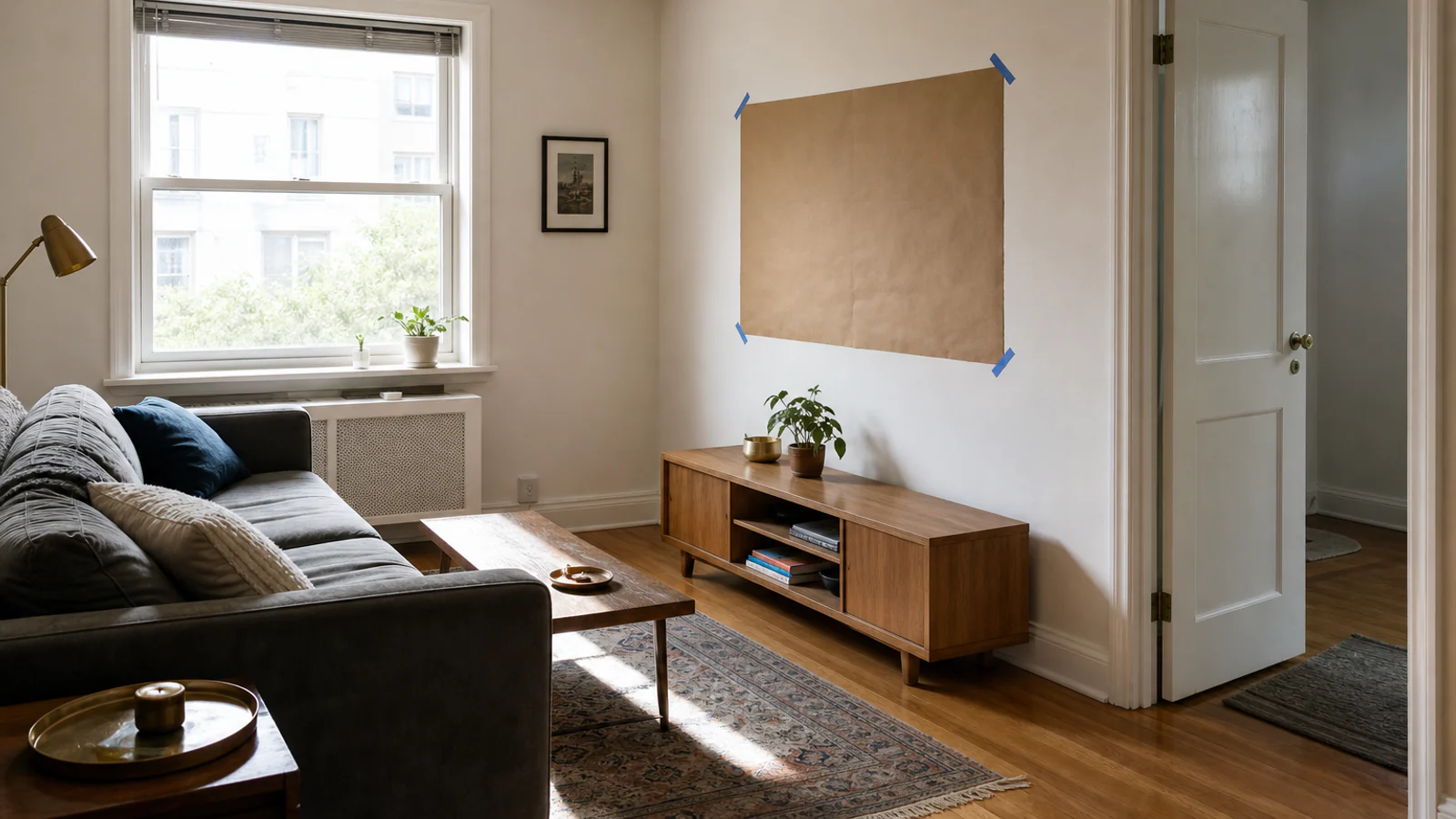
Visual production note. The scene images and studies in this guide are original AI-assisted editorial visuals, reviewed by Dealsmaster. They illustrate reversible design reasoning; they are not documentary before-and-after photographs, material identification or evidence of work performed in a real home.
Sources and boundaries
- U.S. National Park Service: Preservation Brief 18 — historic-building guidance used here only as a clearly labelled analogy for identifying interior features and finishes before irreversible work.
- U.S. EPA: Renovation, Repair and Painting for consumers — pre-1978 painted-surface disturbance boundary; other locations have their own requirements.
- U.S. EPA: Remodeling Your Home and Indoor Air Quality — general source-control, moisture and ventilation boundary during remodeling.
Scope: This guide does not identify materials, determine historic status, prescribe surface treatment, approve a coating, diagnose damage or provide electrical/indoor-air compliance advice. Exact material, product, property and applicable local requirements control.
How this guide was made
Material Edit is an AI-assisted editorial voice; this exact version was reviewed by Dealsmaster on 2026-07-30. The desk name describes a writing framework, not a person, credential, household, product test or firsthand experience.