A four-light diary for dark rooms
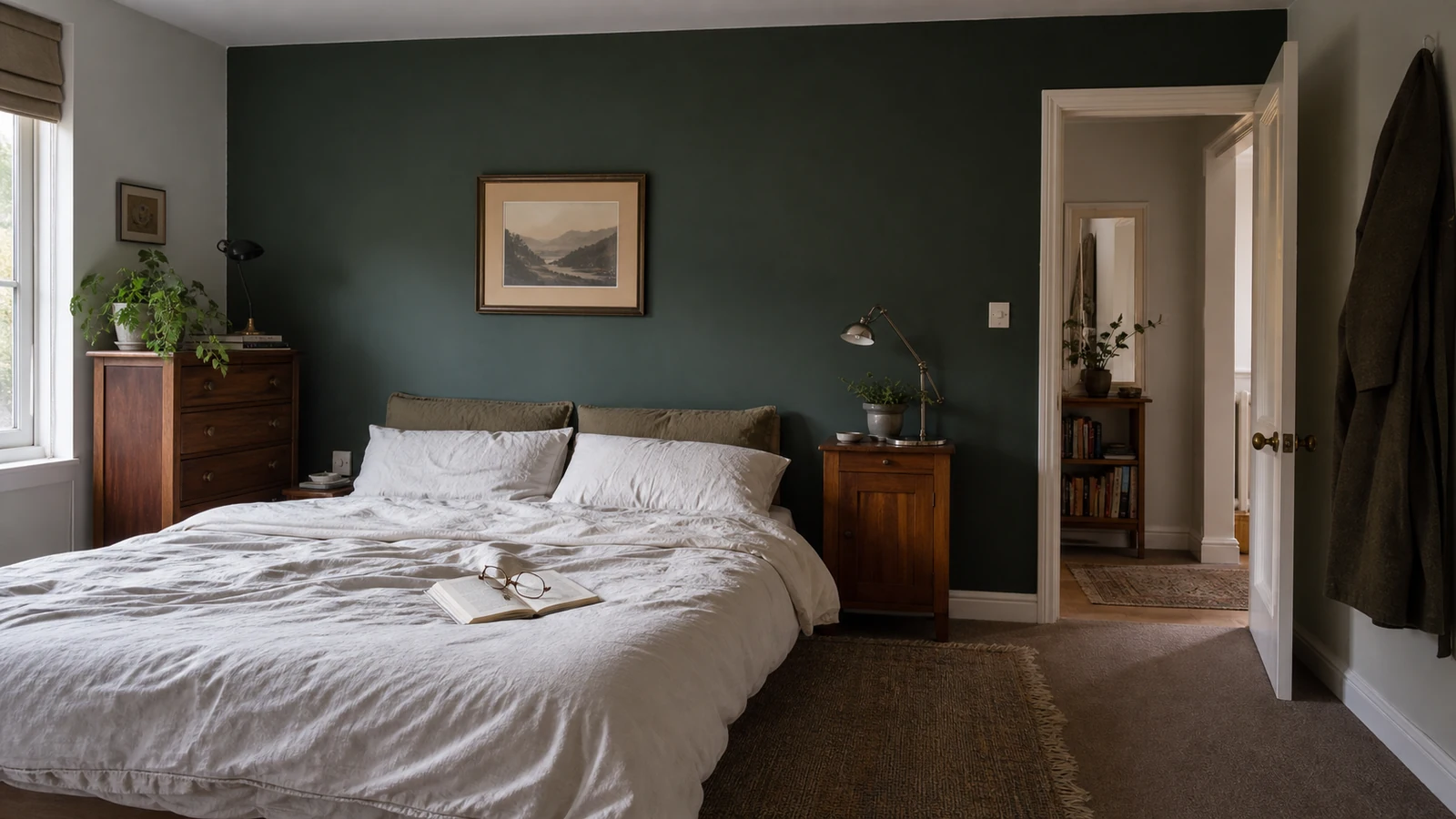
A moody bedroom needs contrast and task light more than it needs another dark object. Choose one deep background, keep a middle range that reveals furniture and texture, and place lighter notes where hands and eyes need information. Then test the same arrangement in morning, midday, dusk and full night. If the room succeeds only with every lamp glowing, it is ready for a photograph—not for an ordinary Tuesday.
The point is not to make a dark bedroom secretly pale. It is to make darkness legible. A charcoal wall can remain charcoal while the wardrobe handle, bed edge, reading page and route to the door are easy to find. This guide treats mood as a changing relationship between daylight, electric light, surface and task. It makes no claim that a colour or styling choice improves sleep or health.
Before paint: run the room as a four-scene test
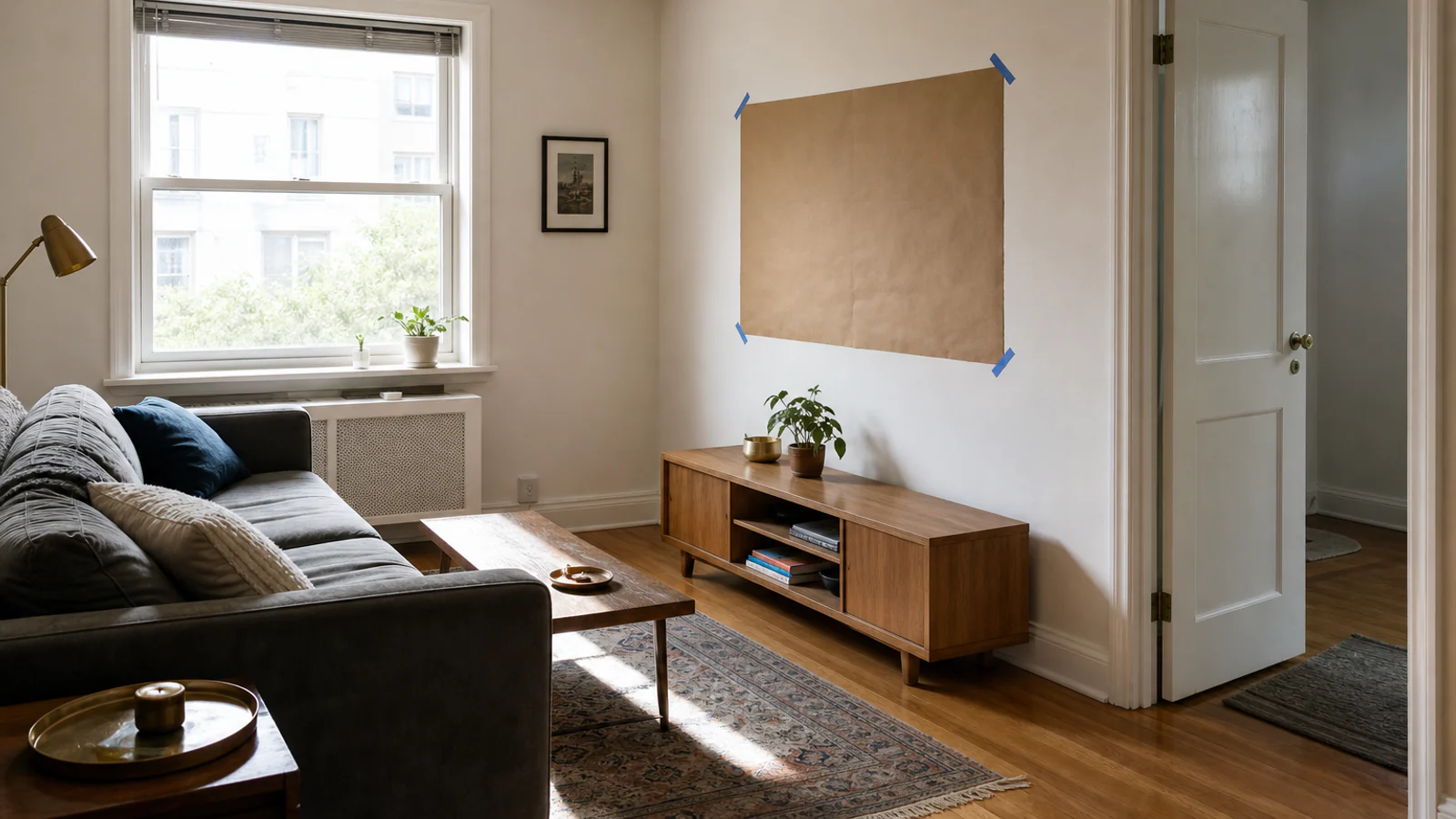
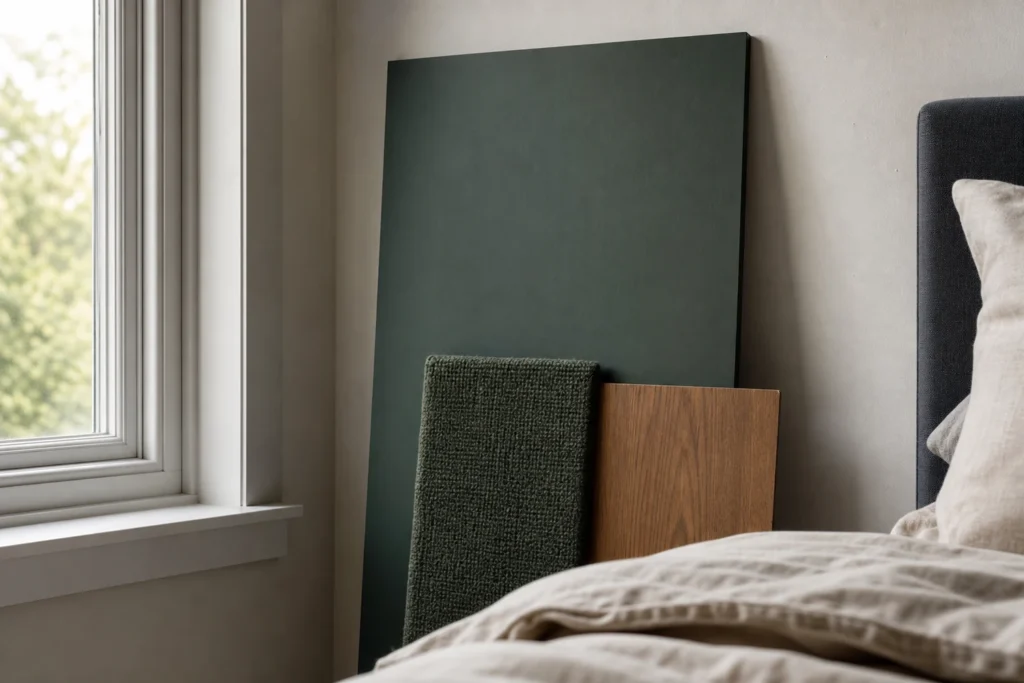
Gather the actual candidates: a large paint sample or removable sample board, bedding, one timber or metal finish, window fabric and the bulbs or portable fixtures you already own. A tiny colour chip held beneath a shop light cannot explain what a full wall will do beside your floor.
Place the dark sample vertically in the proposed location. Photograph it from the same two positions at four ordinary times: the doorway, which shows the room’s hierarchy, and the position where you dress or use a mirror, which shows whether the room works. Locking the camera position matters more than making a beautiful photograph. You want comparable evidence.
Morning
Question: can the day begin without turning on every lamp?
Check the floor route, drawers, clothing and mirror.
Midday
Question: what undertone, sheen and wall texture appear?
Move the sample to a second wall.
Dusk
Question: what becomes the first visual subject?
Switch on only the light that earns that job.
Night
Question: can every necessary task happen without glare?
Test entry, reading, dressing and cleaning separately.
Write observations, not verdicts. “The green sample reads almost black beside the wardrobe at 10 a.m.” is useful. “Too gloomy” does not say what to change. Add the task affected and the smallest possible correction. Sometimes the answer is a pale drawer liner or moving a lamp 30 centimetres, not abandoning the colour.
Build depth with a three-value cast
Colour names are seductive and imprecise. Ink, forest, oxblood and aubergine may all appear dramatically different in a product photograph, then collapse into a similar near-black in a dim north-facing room. Plan by relative lightness as well as hue.
Assign three roles:
One large background: wall, curtain, headboard or rug.
Timber, upholstery and larger textiles that keep their edges.
Bedding edge, tray, handle, mount or shade placed where information matters.
The lightest role need not be white, and it need not occupy much area. A warm oatmeal sheet, pale book page, brushed metal pull or unpainted cane panel can separate two dark masses. The middle role is often what inspiration images omit. Without it, the bed, floor and case goods can merge into one large silhouette.
Test values in a grayscale phone photograph only as a rough editing aid, not as a scientific measurement. If the bed edge disappears completely, look at it in person and decide whether that matters for use. Cameras process low light differently from human eyes; their benefit here is consistent comparison, not authority.
Morning: find the room’s missing edges
Use the light that normally exists when the first person wakes. Leave decorative lamps off at first. Walk the route from bed to door. Open the lowest drawer. Find a dark garment on the chair. Stand where an outfit is checked. The failures are usually local.
If your body blocks the only light reaching a drawer, move or add light from the side rather than brightening the entire room. If a dark rug and floor share a value, a visible border or a different placement may clarify the edge. If the mirror mainly reflects a bright window behind you, change the mirror angle or lighting position before blaming the paint.
Map the task, not the lamp style
| Real action | Where the eye needs information | What to test |
|---|---|---|
| Enter at night | Floor route, door swing, furniture corners | A reachable low-level light without a cable in the route |
| Read in bed | Page and book angle, not the whole wall | Seated glare, shade direction and switch reach |
| Dress | Drawer interiors, clothing colour, mirror-facing side | Whether your body casts the critical shadow |
| Clean | Floor edges, dust on dark surfaces, under-bed area | Temporary brighter general light and access |
| Settle the room | One chosen focal surface | A separate atmosphere scene after tasks pass |
A U.S. Department of Energy residential lighting guide distinguishes general ambient light from task lighting and notes that bedroom activities such as reading may need dedicated task light. That supports a practical planning principle, not a universal fixture count: one lamp does not have to perform every job.
Midday: let the surface tell on itself
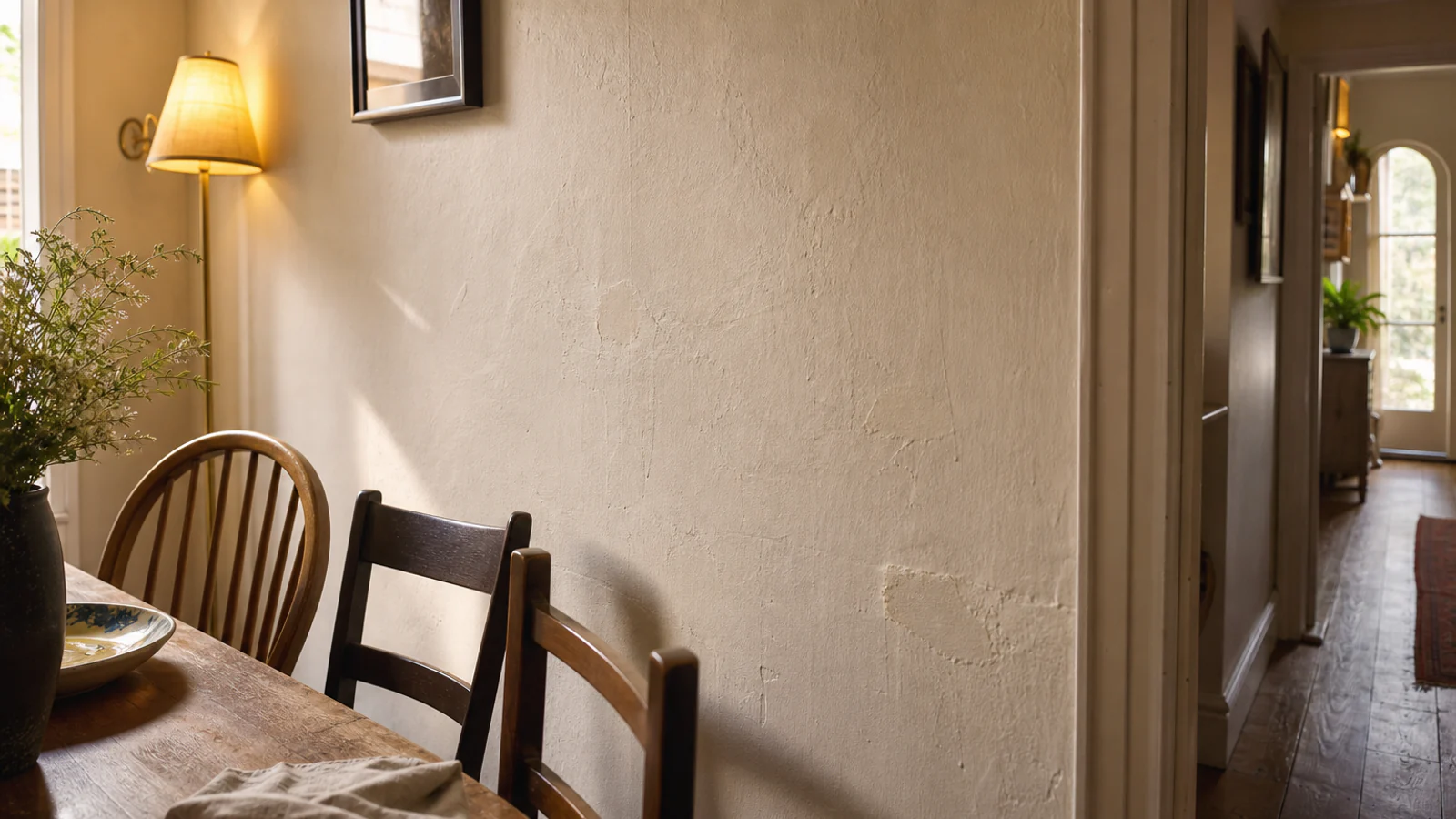
At the brightest ordinary point, study what the dark sample reveals. Does the hue shift toward blue, brown or green? Does a higher sheen advertise every repair? Does the existing wall texture become a feature you did not request? Does a velvet-like fabric swallow the window light while a woven textile shows useful variation?
Move the same sample between walls. A wall facing the window and one beside it receive different light; assigning one colour name to “the room” hides that difference. Put the sample next to fixed elements you cannot wish away: floor, wardrobe, doors, trim and large furniture.
Compare materials at the angles in which they will live. Paint is vertical. Bedding folds. A curtain forms deep pleats. A timber top reflects overhead light. Lay everything flat only if the final room will also be viewed from the ceiling.
Do not buy all the dark layers together
Commit in an order that preserves information. Establish the largest dark field first, then retest existing furniture and textiles against it. Add the middle bridge next. The final layer should solve a named problem: visual separation, tactile comfort, light control or storage—not merely repeat the word “moody”.
Paint and finish work carries product-specific preparation, ventilation, drying and reoccupation directions. The U.S. EPA’s indoor-air guidance puts source control first and identifies painting among short-term activities that can raise indoor pollutants. Follow the exact manufacturer’s directions and local requirements; do not replace them with a generic instruction to crack a window.
Choose the first dark field by what it changes
Walls are not the only large surface, and they are not always the best first move. Choose the field that fixes a specific visual relationship while leaving the room’s practical assets intact.
A wall behind the bed can frame the bed and preserve daylight from a pale window wall. Dark curtains can give a strong vertical field but may reduce useful daylight when closed and add a large care commitment. A deep rug anchors a pale rental, yet its edge must remain readable from the floor and it must suit the household’s cleaning reality. Dark bedding is the easiest field to swap, but it moves and folds, so it does not create the same stable background as a wall.
Ask four questions before choosing:
- Which fixed surface is currently visually noisy? A dark background can quiet it only if the colour does not erase necessary edges.
- Which surface receives the best daylight? Covering it may change the whole room more than the colour sample suggests.
- Which surface is touched, washed or moved most? Its finish and care matter as much as its hue.
- Which change is easiest to reverse? In an uncertain room, a large textile test may be wiser than painting every wall.
Do not default to a single “feature wall” because the phrase is familiar. If the bed already has a substantial headboard, another rectangular field behind it can look like an outline around an outline. The more convincing move may be dark curtains balanced by a middle-value bed, or a dark ceiling only after product, room, height, light and professional requirements have been properly considered. This guide does not prescribe ceiling painting or work near electrical fittings.
Hold the candidate beside the room’s unavoidable pale elements—door, radiator, air-conditioning unit, alarm, outlet plates—rather than cropping them from the test photograph. They will remain after the mood board leaves. Sometimes repeating one pale note in bedding makes those fixed elements look related; painting around them dark without a plan can make each one shout.
Once the first field passes all four light scenes, stop. Live with it for several days before adding another. A dark room develops depth through difference. Covering every remaining light surface immediately removes the evidence you need to judge the first decision.
Dusk: give the eye one place to arrive
Dusk is the forgiving hour, but it still reveals whether the room has a point of view. Decide what deserves first attention from the doorway: the bed, a textured curtain, one artwork or a timber cabinet. Light or contrast that subject, then let supporting surfaces recede.
Equal dots of warm light around every edge can make the room busier and flatter. Switch fixtures on one at a time. From the doorway, note what each one contributes. From the pillow and chair, check whether a bulb, reflective shade or bright strip enters the eye directly. If a light is useful only when nobody occupies the room, its position needs another pass.
The popular recipe of dark walls plus many tiny lamps often leaves the floor route unresolved. Keep a separate practical scene available. The general light may not star in an evening photograph, but it should still make lost earrings, spilled water and cleaning visible.
Night: test reach, glare and the last five minutes
Begin outside the room. Can the first useful light be reached without crossing the darkness or climbing over a sleeping person? Enter, close the door, retrieve something from a drawer, read two pages, put the book down and leave. A switch that exists but is never where the hand needs it is a planning failure.
Use fixtures only as designed, with the specified lamp type, wattage, clearances and mounting. Keep cords out of pinch points and walking routes. CPSC home-fire guidance warns that cords can be damaged beneath rugs or furniture and says extension cords should not be a long-term substitute for needed receptacles. Electrical work and added outlets belong to a qualified person under local rules, not to a styling workaround.
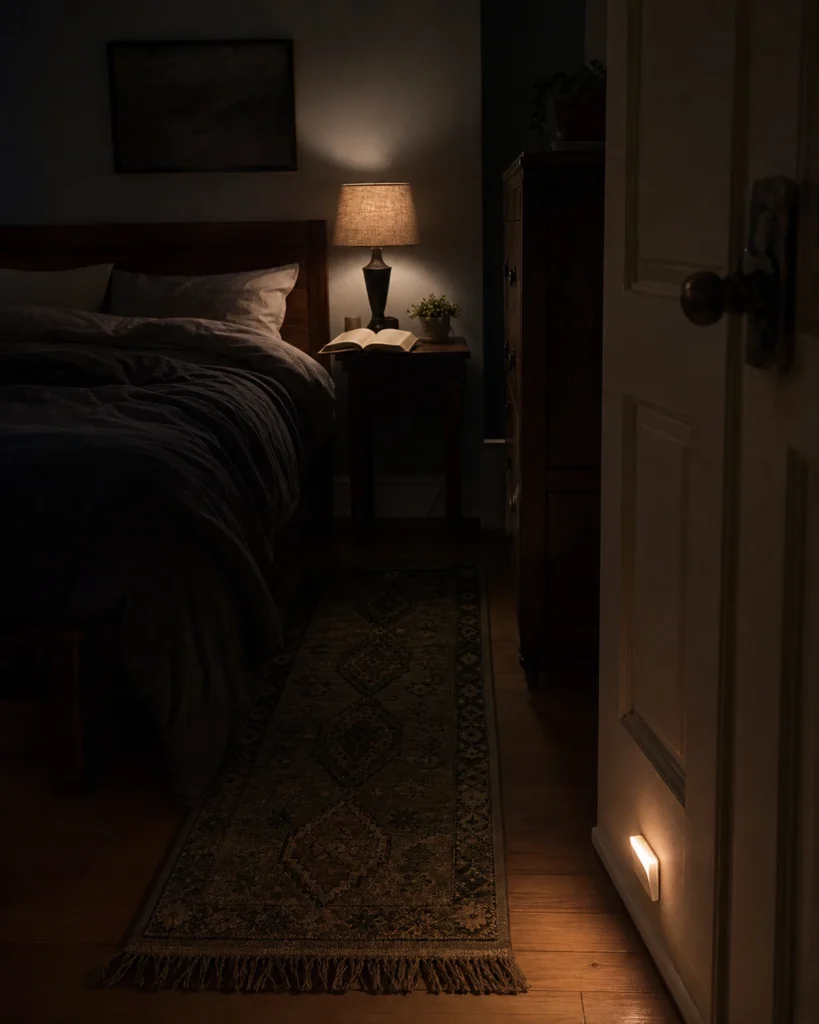
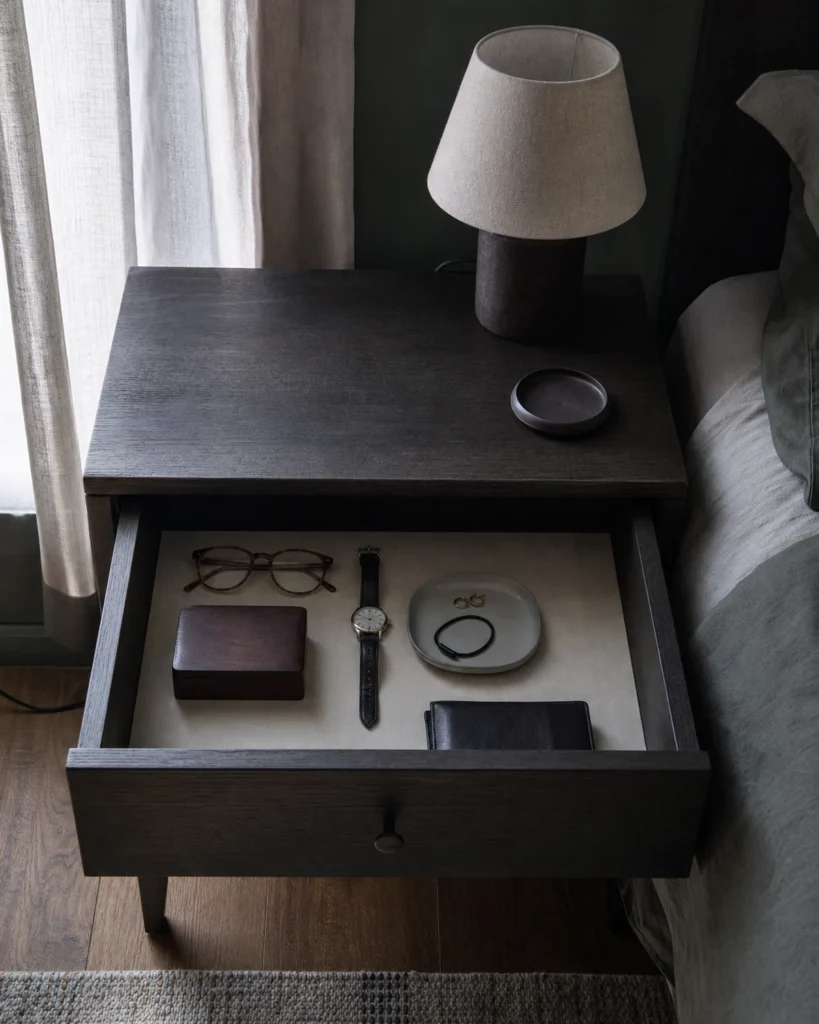
Notice the last five minutes before sleep without making a sleep claim. Where does a glass sit? Where do glasses, a hearing device, medication or a phone go if present? Is the nightstand surface distinguishable from its contents? A pale tray on a dark table can provide more useful contrast than another wall light.
Then run the cleaning scene. Switch on the brightest existing safe combination and look along dark surfaces, behind curtains and beneath the bed. Dark finishes can make some dust conspicuous and conceal other debris in shadow. Plan access and cleaning frequency honestly; a deeply textured wall behind a heavy bed may be a maintenance decision, not just an atmosphere decision.
A reversible north-facing rental prototype
Suppose a bedroom receives cool, limited daylight and the lease prohibits paint. The goal is a deep green room that still supports dressing and reading. Rather than covering every surface, make one reversible prototype behind the bed.
Build in five reversible layers
- Deep field: one large textile or removable panel behind the bed, attached only by a method approved for the wall, material and lease.
- Middle bridge: existing warm timber bedside pieces and a muted rug with a clearly visible edge.
- Readable bed: off-white main bedding plus one patterned textile that contains both green and the timber tone.
- Two task tests: a shaded plug-in reading light and a movable dressing light; retain the general light for cleaning.
- Four-scene diary: fixed-view photographs and notes for three days before buying another dark layer.
If the green panel looks nearly black at midday and shows its colour only beneath one bulb, that is not a failed experiment. It is evidence. A slightly lighter or more textured fabric may keep the intended green visible without changing the whole scheme. If the panel makes the bed width feel cramped, reduce its width or move the dark field to the window treatment.
“Removable” is not synonymous with damage-free or fire-safe. Check product suitability, wall condition, attachment instructions, radiator or heater clearances, sprinkler and alarm access, and the lease. Never cover vents, equipment or required egress.
Edit the room before adding atmosphere
Dark backgrounds sharpen some silhouettes. A white charging cable, a stack of small frames and three unrelated lamp shapes can become the loudest objects in the room. Solve those collisions through subtraction and safe routing before buying decorative camouflage.
- Clear the nightstand to what is used there during one normal day.
- Choose one visual subject from the doorway.
- Remove one redundant dark textile and see whether the remaining layers gain definition.
- Group small objects on a tray only if the tray serves their use.
- Route cords safely and keep plugs accessible; never conceal heat, damage or an overloaded connection.
Texture should also earn its maintenance. Bouclé, velvet, rough plaster effects and open-weave hangings behave differently around dust, pet hair and frequent touch. Put resilient, cleanable surfaces where hands land. Save fragile texture for a place that does not require constant wiping.
Searchable limits: what this colour plan cannot decide
This is a decor and visibility test, not health, sleep, electrical or paint-safety advice. No wall colour, bulb colour or “cocooning” scheme is promised to improve sleep, anxiety, mood or wellbeing.
- Follow paint, adhesive, textile, fixture and lamp instructions for preparation, ventilation, use, clearances and care.
- Keep heaters, radiators, vents, alarms, sprinklers, windows and exits unobstructed.
- Do not improvise wiring, hide cords beneath rugs, or use extension leads as permanent room infrastructure.
- Check leases and obtain permission before paint, panels, drilling or electrical changes.
- If low vision, mobility, medication access or night navigation changes the task, prioritise the user’s access needs and relevant professional guidance over the visual scheme.
The decision sheet: score function before drama
| Scene | What remains readable? | What disappears? | Task affected | Smallest change |
|---|---|---|---|---|
| Morning | ||||
| Midday | ||||
| Dusk | ||||
| Night |
The scheme passes when its intended deep field survives daylight, furniture edges remain understandable, necessary tasks have suitable light, and one evening focal point emerges without every fixture competing. It does not have to appear equally dramatic in all four scenes.
Your next action: take the boring morning photograph
Place one large dark sample beside the bed tonight. Photograph it from the doorway now, then again tomorrow morning, at the room’s brightest ordinary time and at dusk. Keep the framing fixed. Under each image, write one object that remained readable and one task that became harder.
Make the smallest correction before changing the colour. A room with four good hours of use is more persuasive than a room designed around one flattering minute.
Sources and scope
- U.S. Environmental Protection Agency: Improving Indoor Air Quality — source-control and ventilation boundaries for painting and other pollutant-generating activities.
- U.S. Department of Energy: High-Performance Residential Lighting guide — bedroom ambient and task-light planning context.
- U.S. Consumer Product Safety Commission: Home Electrical Safety Checklist — damaged-cord, under-rug and long-term extension-cord cautions.
Sources were checked 30 July 2026. U.S. references do not replace product instructions or local electrical and property rules. This article contains no affiliate links and reports no personal room or product test.
About the visuals in this guide
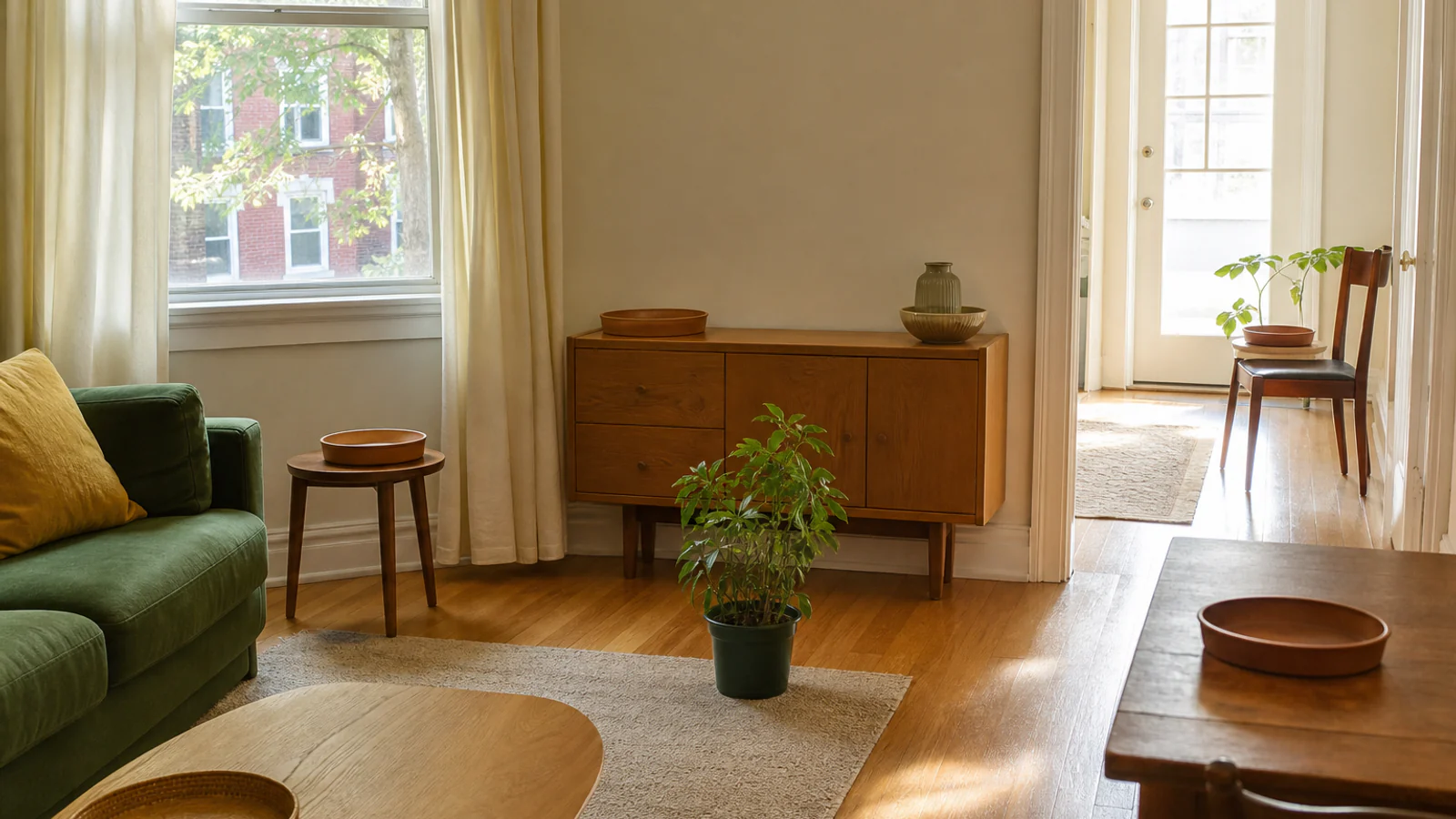
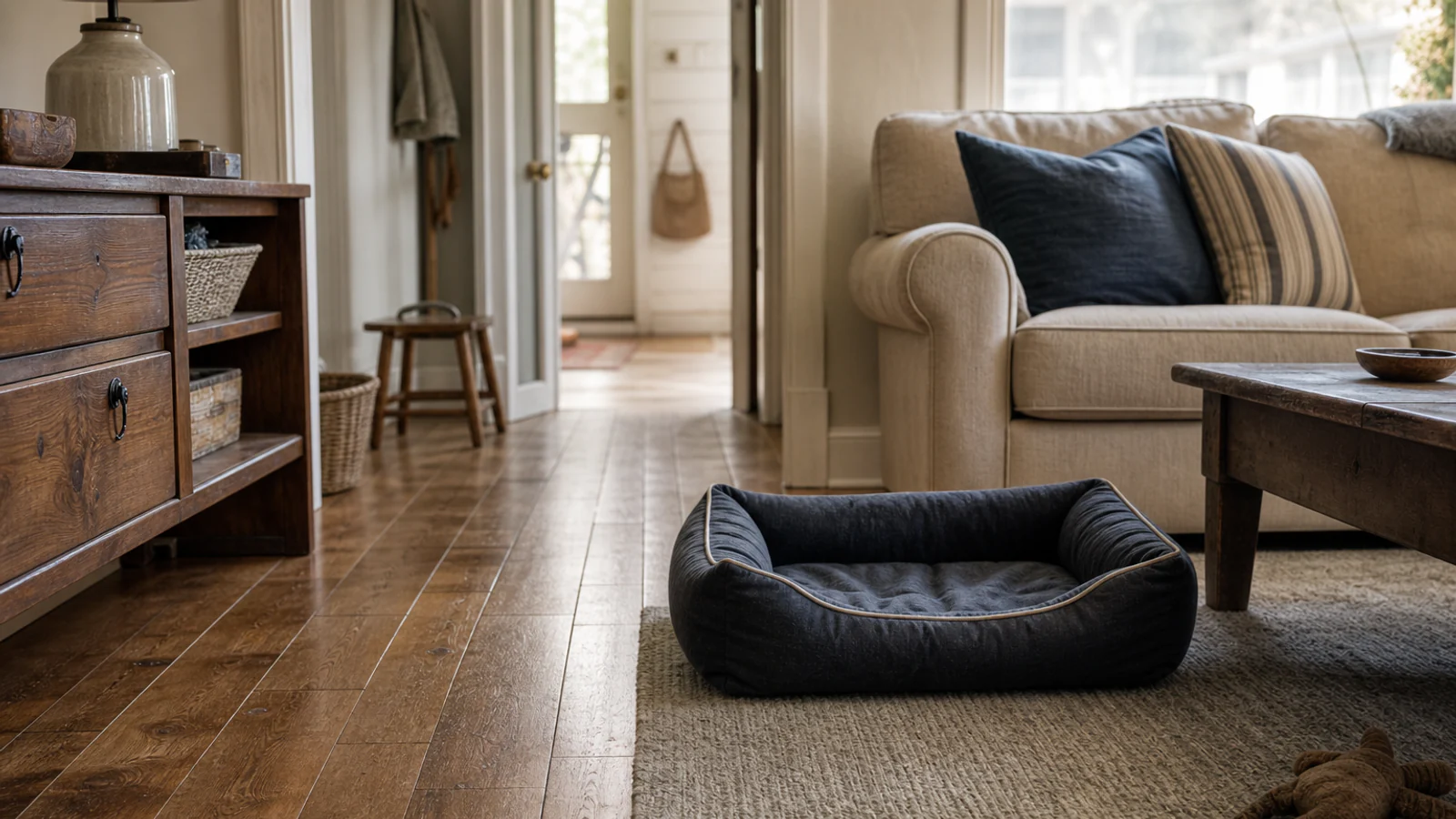
These are original Dealsmaster visual studies made with AI-assisted image tools and art-directed for this article. They illustrate planning examples, not photographed reader homes, product tests, or guaranteed outcomes.