One ordinary day, drawn as a circuit
A first apartment should catch your life before it collects things.
Walk the day by time—wake, leave, return, cook, sit, close—and place the few objects that make each hand-off easier.
- 0107:00
- 0208:00
- 0318:30
- 0422:30
An empty apartment makes every missing object feel equally urgent. The sofa, saucepan, lamp, shoe rack and artwork all compete in the same loud voice: buy me before the room looks unfinished.
They are not equally urgent.
The fastest way to set priorities is to walk through one ordinary day. Furnish the sequence, not the photograph.
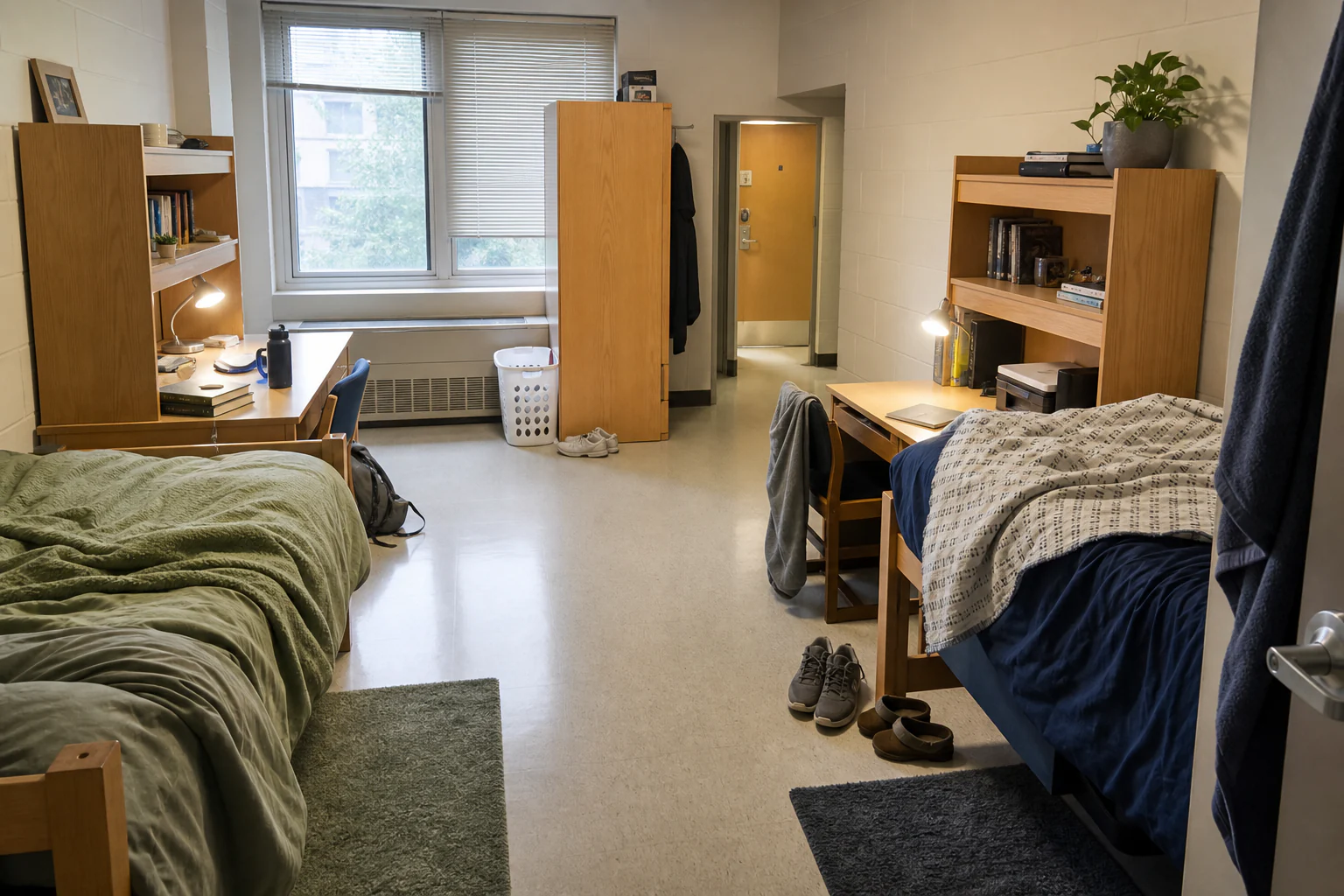
07:00 — Wake, wash, dress
The 24-hour route
Place decisions at the hand-offs
- 07:00WakeClothes, towel, and bathroom route
- 08:00LeaveKeys, bag, shoes, weather layer
- 18:30ReturnGroceries, food prep, waste
- 20:00SettleSeat, meal, conversation, charging
- 22:30CloseLocks, lights, tomorrow’s first move
The first useful bedroom does not need a coordinated set. It needs:
- a safe, stable sleeping surface;
- bedding appropriate to the mattress and climate;
- a route to the door;
- clothing that can be reached and returned;
- a light you can operate from a sensible place;
- somewhere for tomorrow's clothes or current outfit.
Measure door, wardrobe and drawer openings before adding bedside furniture. A narrow room can tolerate visual imperfection better than a blocked drawer.
The bathroom needs a dry towel place, basic cleaning supplies, privacy and a way to carry personal items if it is shared. Do not install adhesives, shelves or fittings until lease and surface rules are understood.
08:00 — Leave with the right things
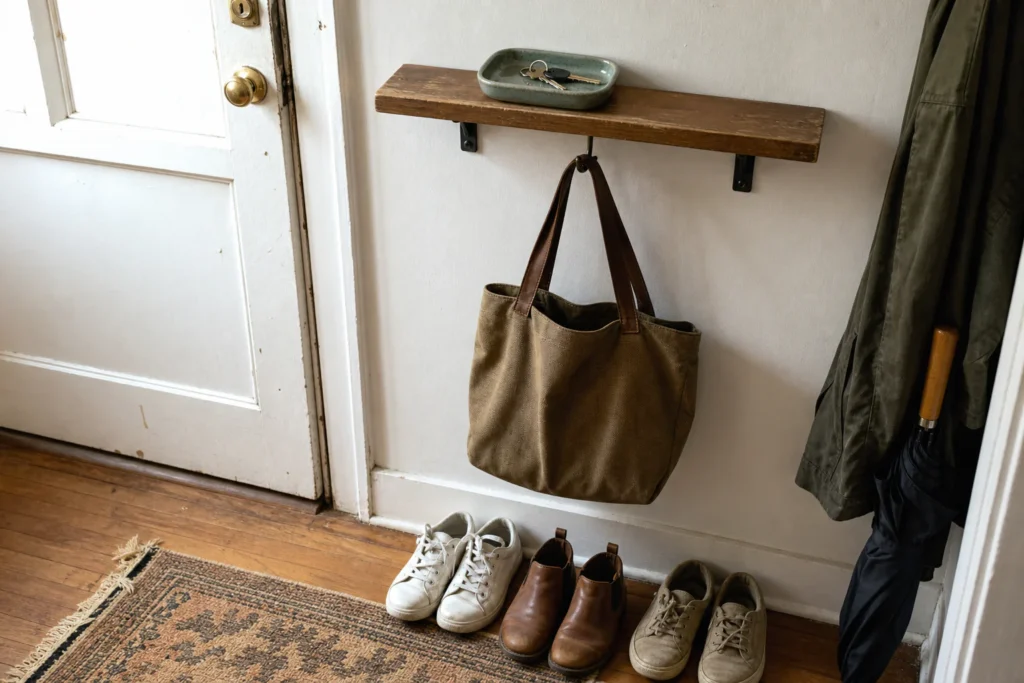
Watch the departure sequence:
- put on shoes;
- pick up keys and access card;
- take bag;
- check weather layer;
- leave.
Put landing points where hands already pause. A tray on an existing cabinet may solve keys. One row of hooks, installed only with permission and suitable fixings, may solve bags. Shoes need a capacity limit before they need furniture.
If the front door opens directly into the living room, build an arrival strip with placement and lighting rather than a bulky divider. The existing Dealsmaster no-entryway guide goes deeper.
18:30 — Bring food in and cook
Food-arrival route
Groceries need a clean landing before storage
- DoorBags enter
- LandingSort chilled, pantry, and household items
- KitchenStore and prep
- WastePackaging leaves without crossing the meal
Do not fill cupboards by category on the first evening. Follow one meal:
- groceries arrive;
- chilled food reaches the refrigerator;
- ingredients move to preparation;
- utensils and cookware support the method;
- waste leaves the worktop;
- dishes move to washing and drying.
Protect one preparation area. Store frequent items within the easiest reach and heavy items low enough to lift safely. Keep food separate from household chemicals.
Buy for the meals you cook now. A first kitchen often accumulates aspirational appliances while missing a usable knife, chopping board or lidded pan.
Before roommates combine belongings, inventory duplicates. Two kettles may be unnecessary; two chopping boards may be very useful. Decide by simultaneous use, not by category.
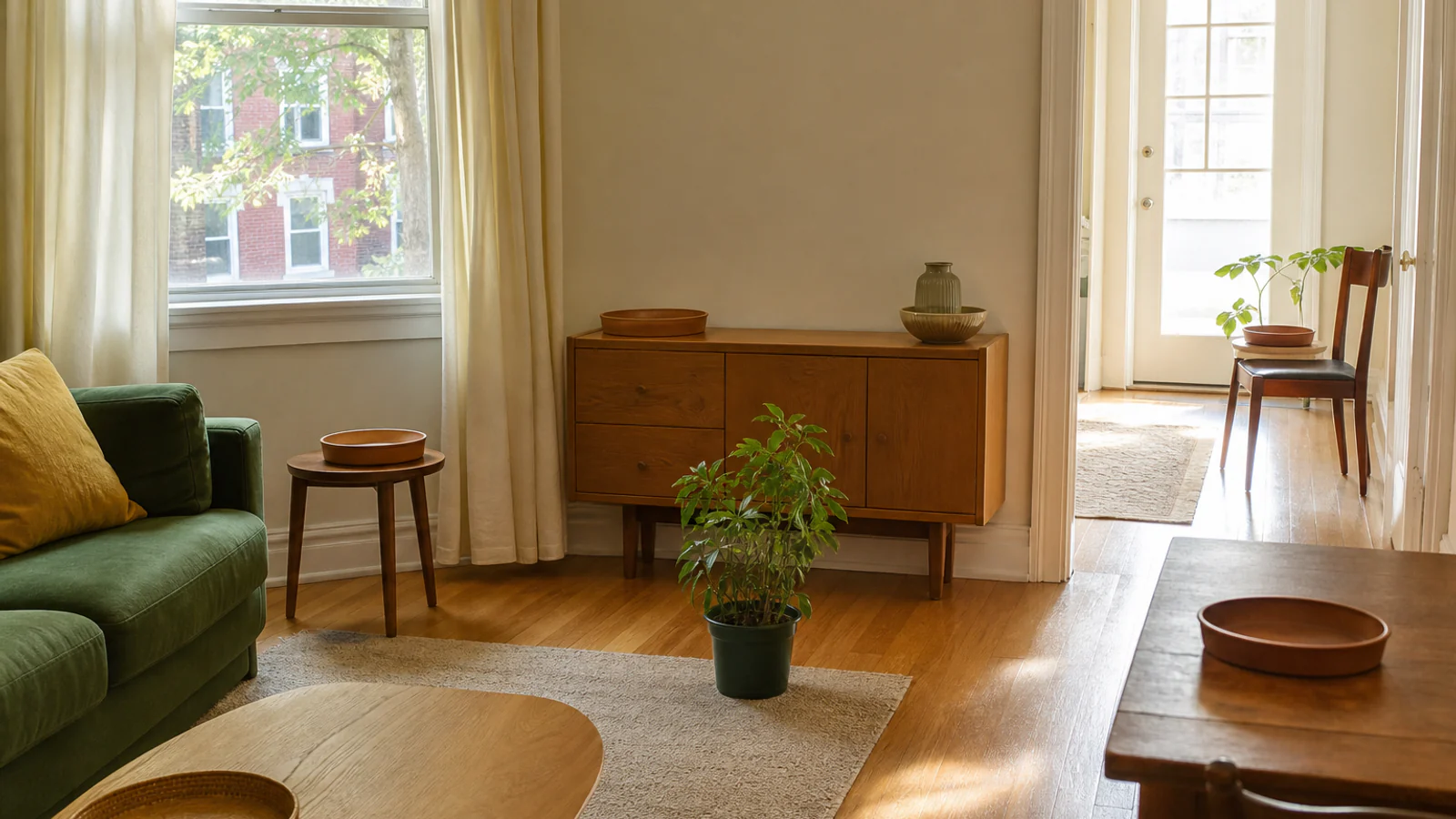
20:00 — Sit, eat, talk
The evening minimum
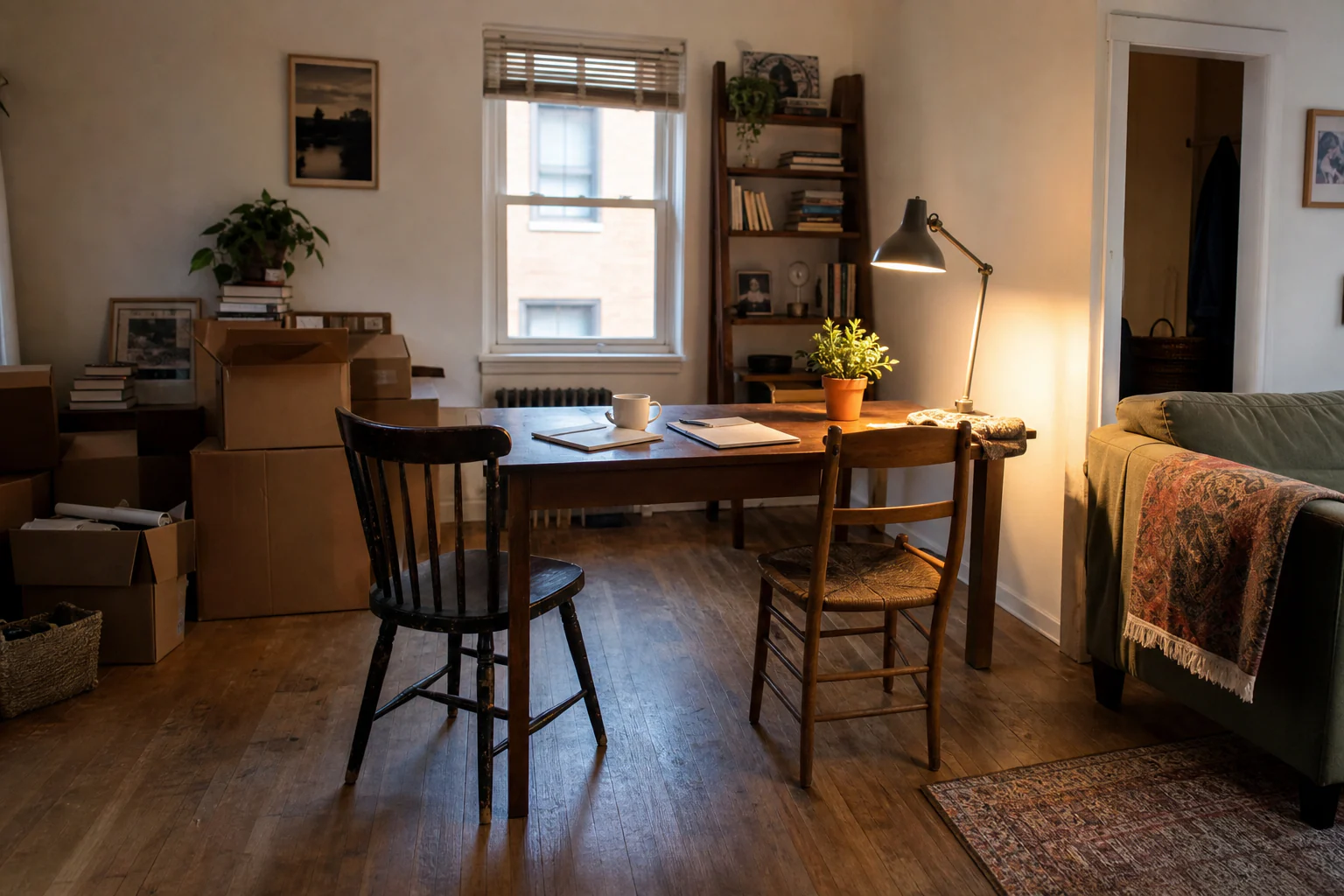
Make one place where two people can be fully at home
- SitEnough real support for the ordinary household.
- EatA stable surface at a workable height.
- TalkSeats oriented toward each other, not only a screen.
- DimA softer light layer for the last hours of the day.
Choose the living-room job before the largest furniture:
- conversation;
- television;
- gaming;
- reading;
- exercise;
- hosting;
- work.
Most rooms can support several, but one will control the main orientation.
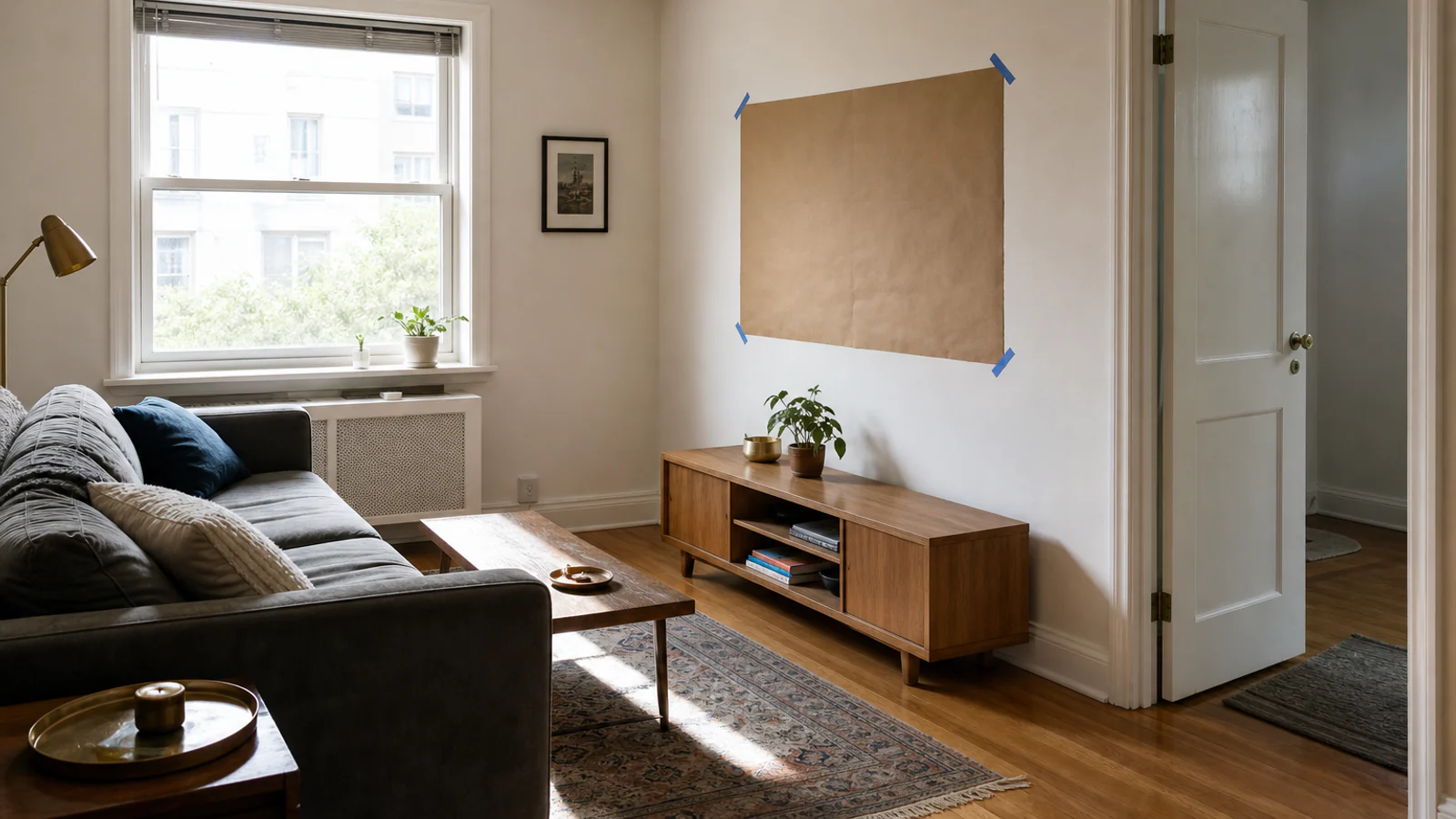
Tape the sofa footprint and its delivery route. Measure lifts, stairs, doors, turns and any removable legs according to the actual product. A sofa fitting on the floor plan does not mean it can reach the floor.
Use temporary, known furniture before buying in panic. A borrowed chair for two weeks can reveal whether the room needs a deep sofa, compact loveseat, two chairs or a table first.
If meals happen in the living area, tape the occupied dining footprint as well as the sofa. Furniture does not get priority merely because it appears first in a typical catalogue.
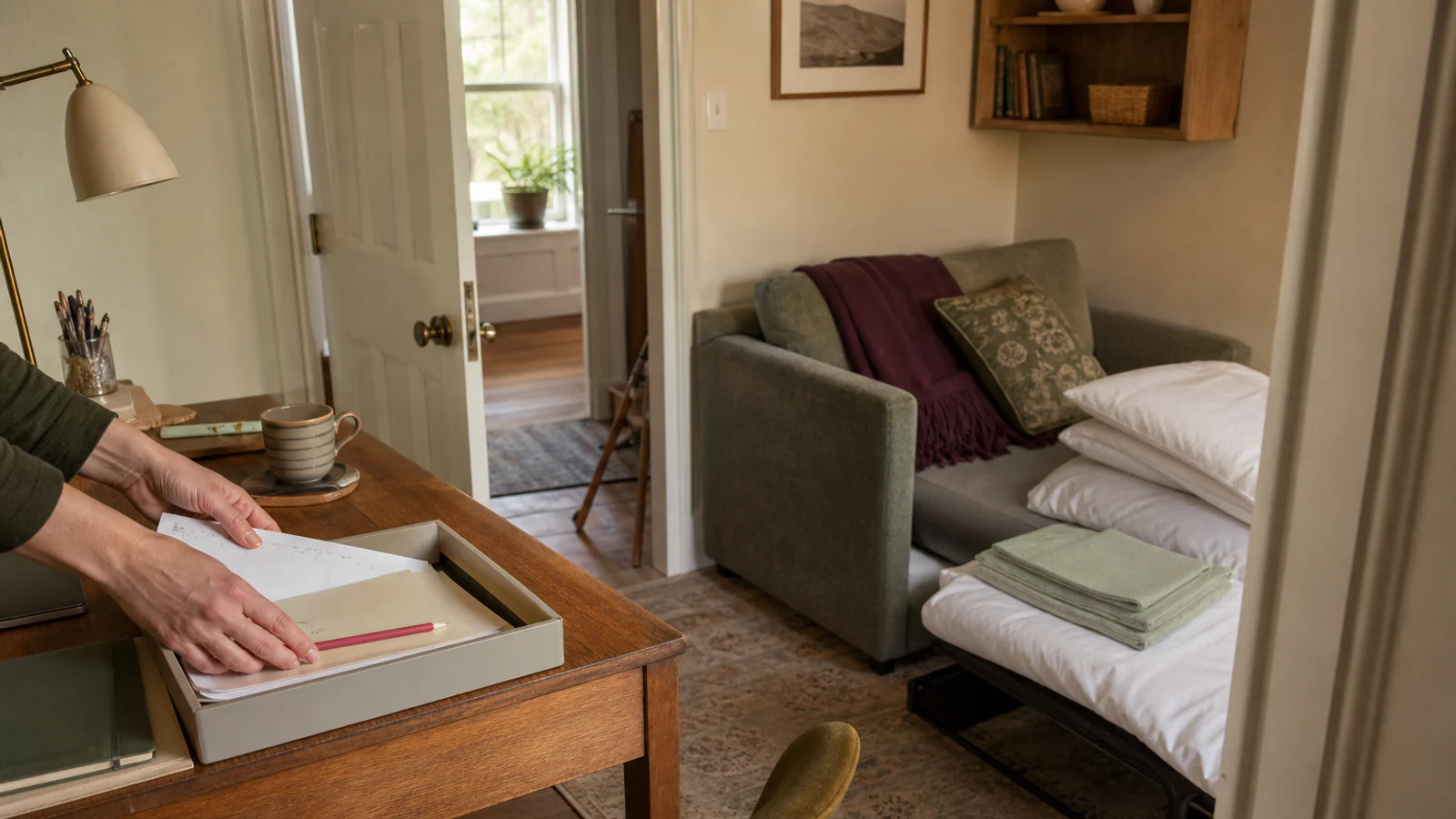
22:30 — Close the apartment
At night, the apartment needs:
- a safe route from living area to bedroom and bathroom;
- light that does not require crossing darkness;
- a place for charging outside bedding;
- doors and windows that operate normally;
- cooking equipment confirmed off;
- rubbish and food managed according to building rules.
Test the route with the main lights off and ordinary night lighting on. Do not use decorative lights as a substitute for necessary illumination if they create glare, exposed cords or uncertain electrical loads.
Build a shared/private ownership map
Ownership map
Shared, private, and undecided are three useful categories
| Zone | Examples | Rule |
|---|---|---|
| Shared | Cookware, cleaning, living-room light | Agree before buying |
| Private | Bedside, wardrobe, personal desk | Respect control |
| Undecided | Spare wall, guest seat, display | Leave breathing room |
For roommates, every item belongs to one of four classes:
| Class | Example | Decision |
|---|---|---|
| Personal/private | bedding, toiletries | owner chooses and maintains |
| Personal/shared-use | one person's pan everyone may use | permission and replacement rule |
| Shared/shared-cost | cleaning tools, dining table | budget, ownership after move-out |
| Building/landlord | fixed light, appliance | report defects; do not alter casually |
Write down expensive shared purchases. Who owns the sofa when the lease ends? What happens if one person leaves early? A friendly conversation before purchase is easier than a forensic discussion on moving day.
Do the same for labour:
- rubbish;
- cleaning;
- consumables;
- bills;
- food;
- guest preparation.
A visually calm apartment can still be an unfair system.
The three-budget method
Three-budget method
Spend in the order certainty arrives
- Function this weekSleep, wash, eat, lock, light
- Friction after observationFix repeated inconvenience
- Character over timeArt, textiles, objects, and upgrades with a story
Budget one: function this week
Spend on safe sleep, food preparation, hygiene, cleaning, required lighting and access.
Budget two: friction after observation
After one or two weeks, address repeated problems: nowhere for damp towels, chair blocks drawer, keys disappear, no place to eat, glare on screen.
Budget three: character over time
Art, better textiles, found furniture, paint where permitted and meaningful objects. Character improves when it is gathered from actual life in the room.
Keep an honest buy later list with the problem beside each item. “Floor lamp—sofa corner is unreadable after 19:00” is better than “more lighting.”
Five no-regret first-apartment measurements
Measure once, avoid five common regrets
Five first-apartment dimensions worth recording
0 of 5 complete
- Delivery route: narrowest door, tightest turn, lift and stair limits.
- Open footprint: drawers, doors, recliners and pull-out beds in use.
- Main walking route: include bags, laundry and two people passing.
- Plug and light reality: outlets, switches and where cords would cross.
- Window and fixed-system boundary: radiators, vents, heaters, alarms and treatments.
Do not place furniture where it blocks required exits, ventilation or equipment access. Report unsafe conditions and use qualified help where local rules require it.
A constructed example: two roommates, limited first-month budget
The pair plan a sofa, coffee table, dining set and matching lamps. Their 4.2 × 3.4 metre living area must also handle remote work twice a week.
The 24-hour route reveals:
- both arrive with bags but no landing place;
- meals are eaten on laptops because no table exists;
- the proposed coffee table occupies the chair pull-back;
- one roommate works near the only useful daylight;
- the sofa delivery turn is narrower than expected.
Revised order:
- two stable second-hand dining chairs and a compact table that doubles as work surface;
- one near-door tray and existing hooks used with permission;
- two task lights, chosen for separate jobs;
- a smaller sofa only after the delivery route is checked;
- no coffee table until the room proves it needs one;
- art gathered from existing prints and one thrifted piece after the main furniture settles.
The apartment looks less finished during week one and works more completely.
Make it feel like home without filling it
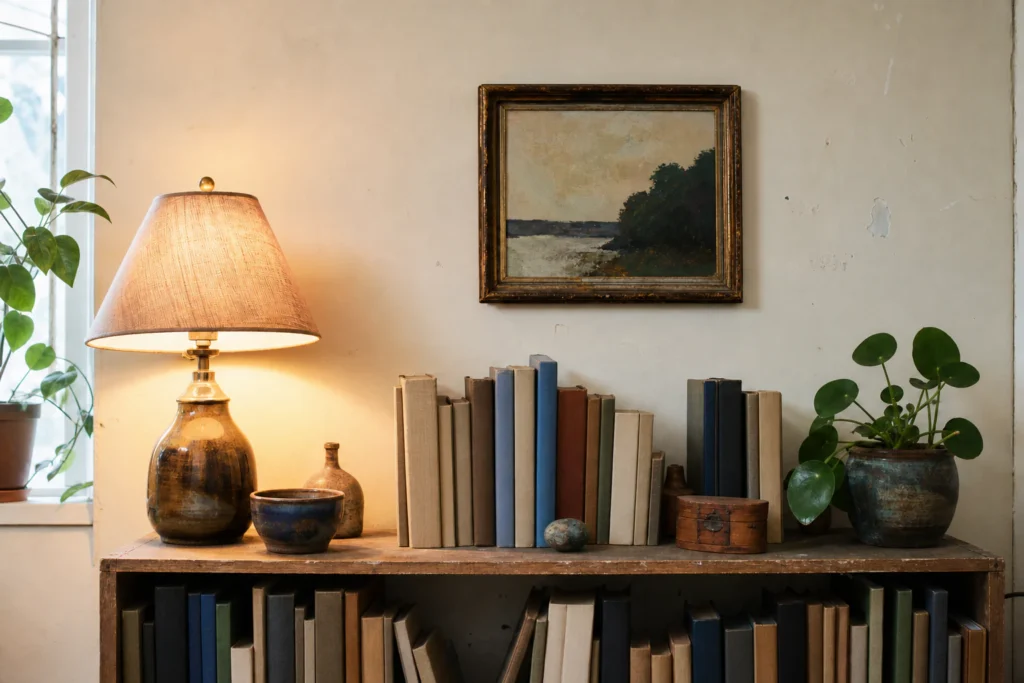
Repeat one or two visual connections:
- a wood tone;
- a colour found in existing objects;
- a metal finish;
- a textile rhythm.
Leave room for disagreement and change. Roommates do not need identical taste; they need shared connectors and clear ownership.
Display personal objects where they can be seen without becoming fragile obstacles. Use art and textiles to absorb the “temporary” feeling before buying decorative furniture.
The first apartment becomes convincing when its routines fit. The decoration then has something real to describe.
Build one complete corner, then stop
A nearly empty first apartment can make every unfinished wall feel urgent. Resist the urge to distribute a thin layer of “done” across every room. Complete one ordinary sequence instead: a chair that supports you, a table or landing surface within reach, a useful lamp, and one personal object you genuinely want to see. That corner becomes a place to recover while the rest of the apartment is still being understood.
Completion is functional, not photographic. If the chair faces a blank wall today because that is where the evening light is best, the room is already giving you valuable information. Live with it for a week. Notice the conversation angle, laptop glare, heater, outlet, and route to the kitchen before deciding that a large media unit or gallery wall belongs there.
This slower sequence also protects the budget from duplicate “temporary” purchases. Borrowed, folded, or second-hand pieces can define the needed height and footprint before a permanent object is chosen. Record what the temporary piece gets right as well as what it lacks.
Keep a rental-change ledger
Create one simple note with four headings: existing condition, allowed change, product or professional instruction, and how the change will be reversed. Photograph existing marks before installing anything. Save the landlord or building guidance that controls wall fixings, painting, window treatments, large deliveries, and disposal.
The ledger is not paperwork for its own sake. It prevents the story of a change being lost between roommates or across a long tenancy. It also helps separate a reversible decorating choice from work that touches wiring, plumbing, structure, fire protection or building services. Those systems deserve the correct permission and qualified help.
Do a 30-day edit before filling the undecided zones. Circle the object that is constantly carried between rooms, the surface that becomes a pile, and the route that feels awkward with groceries or laundry. Spend the second budget on one repeated friction—not on the emptiest photograph.
Useful next action
Walk the apartment from waking to bedtime with a note on your phone. Record only the moments that require moving an object twice, stepping around something or searching. Spend on the repeated friction first.
About the visuals in this guide
These are original Dealsmaster editorial illustrations produced with AI assistance for explanation and inspiration. They do not document a real household, tested installation, reader result, or professional inspection.
Sources and limits
Useful advice should show its working
Material claims were checked against the primary guidance below. Dealsmaster dimensions and layouts are editorial planning starting points, not universal codes, professional assessments, or product instructions. Local rules, tenancy terms, building conditions, user needs, and manufacturer guidance control.
- U.S. Consumer Product Safety Commission — Anchor ItFurniture and television anchoring guidance.
- U.S. Fire Administration — Prepare for FireHome alarm, escape-plan, and ordinary fire-preparedness context.
Disclosure: This guide contains no affiliate links, sponsorship, or claimed product testing. Constructed examples are planning examples, not reported Dealsmaster households.