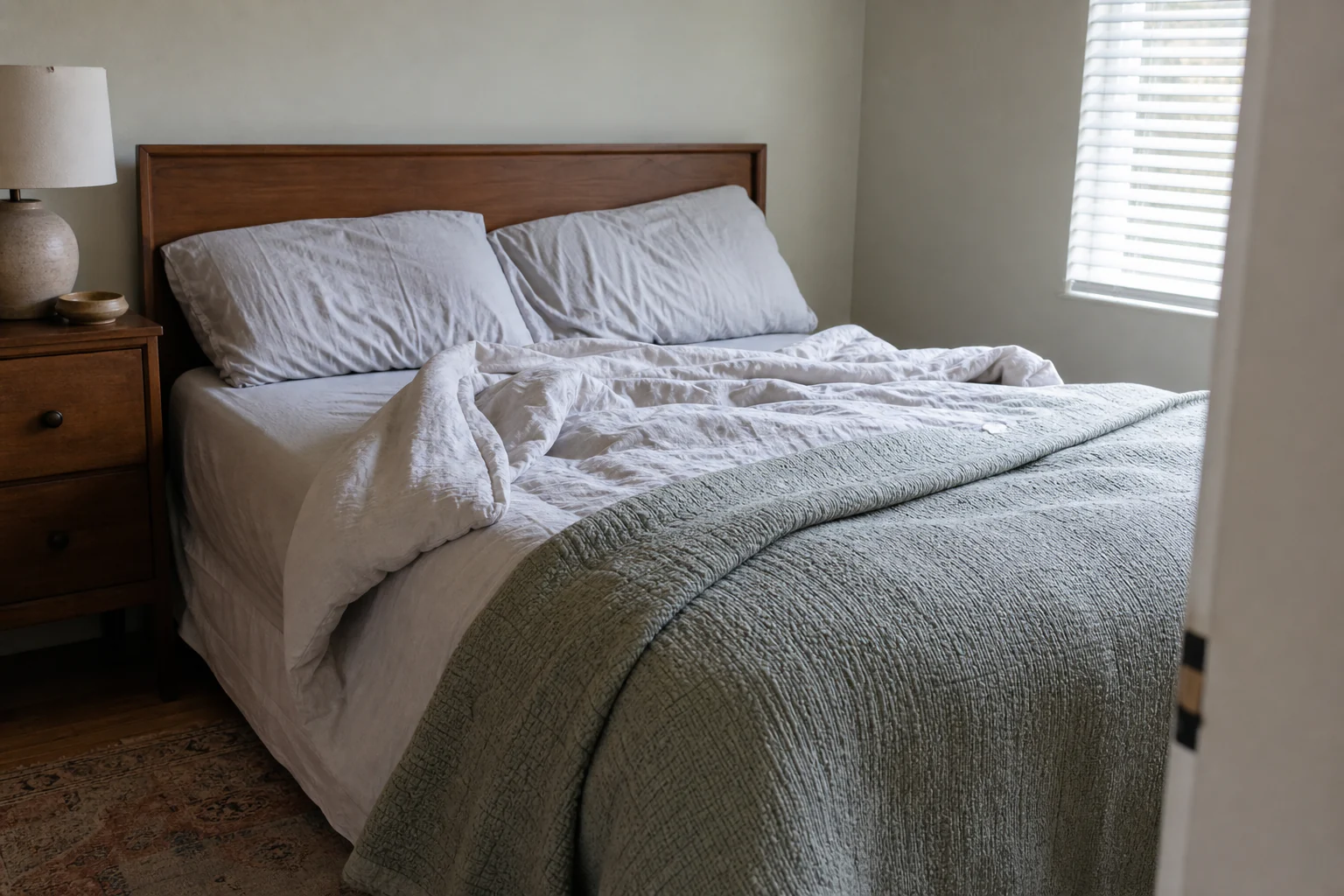
A bed drawn as climate and laundry
Layer for the sleeper, not the photograph.
Every layer needs a job: touch the skin, carry warmth, adjust through the night, or finish the room without sabotaging the wash.
- 01Sleep
- 02Adjust
- 03Wash
- 04Remake
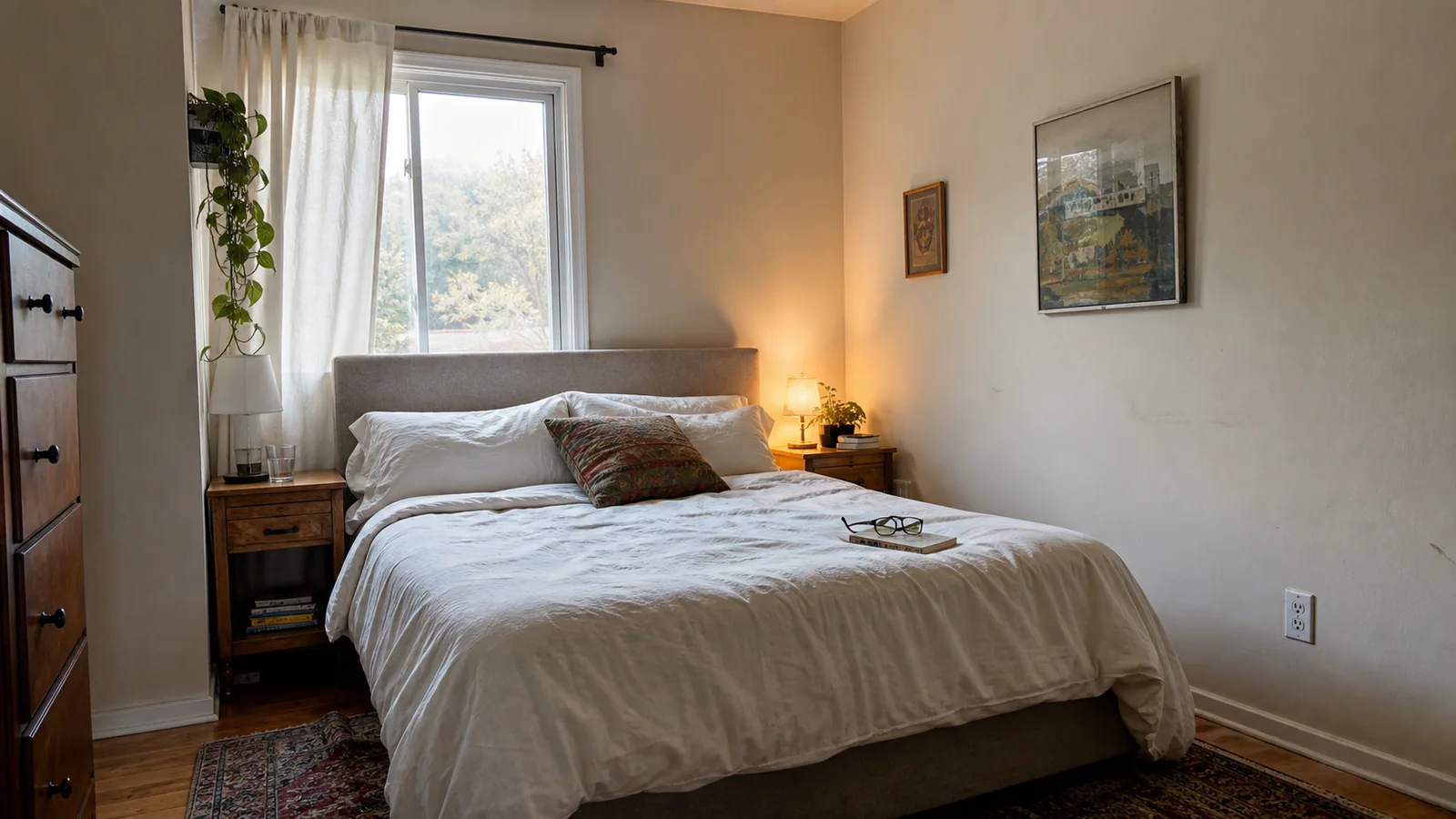
Styled bedding is often built for the moment before anyone gets in. Real bedding has to survive a warm night, a cold foot, two different sleepers, a small washing machine and the fact that eight decorative pillows need somewhere to go.
Treat the bed as a small climate and maintenance system.
The most useful combination has:
- a skin-contact layer you can wash;
- a warmth layer you can change;
- an independent adjustment for the sleeper who needs something different;
- a top visual layer only if it can be maintained and moved.
The bed should be able to change at 2 a.m. without opening a storage cupboard.
Start with the sleeper brief
Sleeper brief
Describe the night before choosing the textile
| Question | Your evidence |
|---|---|
| Temperature | Who runs hot, cold, or changes through the night? |
| Touch | Which textures feel comfortable against skin? |
| Movement | Do layers twist, migrate, or get kicked away? |
| Laundry | Machine size, drying method, and realistic wash frequency |
Write one line for each sleeper:
- usually warm, cool or variable;
- likes weight or dislikes pressure;
- kicks covers away or stays still;
- sensitive to particular textures;
- shares covers or wants independence;
- needs easy laundering for children, pets, allergies or other household reasons;
- climate and heating/cooling reality;
- laundry-machine and drying capacity.
Do not turn preferences into diagnoses. When sleep, pain, allergy or temperature regulation is a medical concern, seek appropriate professional advice.
The sleeper brief often reveals that “one perfect duvet for both people” is the wrong problem.
Build from the mattress upward
Four-layer job stack
Remove any layer that cannot explain its work
- Visual finishOptional shape and colour; easy to remove
- AdjustmentReachable warmth that changes at 2 a.m.
- Main warmthThe core cover matched to climate and sleeper
- Washable baseThe layer that touches the body and gets cleaned often
The washable base
Fitted or flat sheet according to preference, plus pillowcases. Choose fibre and weave by feel, care, climate and budget rather than a universal hierarchy.
Read the actual fibre and care labels. A textile's marketing name may not tell you how it washes, dries or wears.
The main warmth layer
Duvet, comforter, quilt or blanket. Choose by usable warmth and care. Confirm:
- dimensions against the bed and desired drop;
- fill/material information;
- washing instructions;
- machine capacity needed;
- drying method;
- whether a cover is used.
A bulky item that cannot be cleaned through a realistic method is not low-maintenance merely because the colour hides marks.
The adjustment layer
A light blanket, throw, half-width quilt or separate single duvet. This is the layer one sleeper can add or remove without changing the entire bed.
The visual finish
A coverlet, folded quilt or textile that gives colour and structure. It must have a daytime/night-time address. If it lives on the floor after bedtime, edit it.
Five useful combinations
Five bedding systems
A combination is a response to a situation
- Warm climateWashable base + light main cover + one foot-of-bed layer
- Changeable seasonMedium main cover + genuinely usable adjustment layer
- Hot/cold partnersShared base + separate personal warmth
- Small machineSeveral washable pieces instead of one enormous cover
- Dorm/first roomFast remake, compact wash load, minimal floor migration
1. The warm-climate minimal bed
- washable sheet;
- light main cover appropriate to the household;
- one folded adjustment blanket at the foot;
- minimal decorative layer.
Visual interest comes from texture and a clear colour relationship, not volume.
2. The changeable-season bed
- washable base;
- medium main layer;
- light quilt or blanket available independently;
- seasonal adjustment stored within easy reach.
The system changes one component rather than replacing the entire bed.
3. The hot/cold partner split
- shared base;
- separate single-size warmth layers or one shared layer plus one personal adjustment;
- optional visual coverlet across the lower bed.
Separate covers may change the look. They can also reduce midnight negotiations. Make the visual connection through colour, edge alignment or one shared top layer used only when appropriate.
4. The small-laundry-machine bed
- duvet/comforter chosen only if it fits the actual wash plan;
- washable cover or lighter quilts that can be cleaned separately;
- fewer oversized decorative textiles;
- drying plan before purchase.
Laundry capacity is a design measurement. Measure the machine and read its guidance; do not assume a tightly packed bulky item will clean or rinse properly.
5. The dorm or first-room bed
- exact institution/mattress size confirmed;
- first-night washable base;
- one main layer and one adjustment;
- limited pillows;
- no draped textiles that conflict with heaters, sprinklers or housing rules.
The bed may be the room's largest visual field. One strong colour or pattern can do more than many accessories.
Use laundry maths
Laundry maths
Count the loads the photograph hides
- Weekly skin-contact loadSheets + pillowcases
- Adjustment loadBlankets used against the body
- Main-cover cycleLabel, use, allergies, spills, and local conditions
- Drying volumeWhat your machine and drying space can actually handle
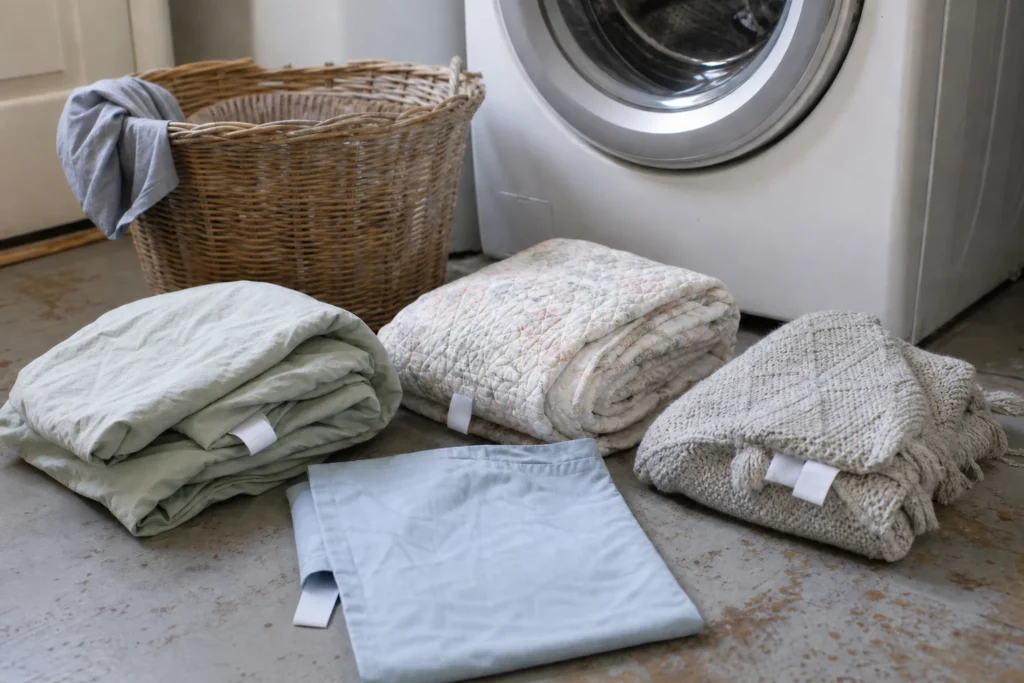
For every layer, ask:
- How often will this realistically need cleaning?
- Can it be washed at home?
- Does it need separate washing?
- Where can it dry?
- What replaces it while it is being cleaned?
- Will the household follow the care label?
The FTC's U.S. textile rules cover fibre labelling for household bedding such as sheets, blankets, comforters and quilts. Care requirements vary by product and jurisdiction; the product's current label is the working instruction.
Keep a photograph of care labels for items whose tags are difficult to reach. Do not cut away essential information without recording it.
Make colour survive the night
Colour after sleep
Build colour into the layers that stay on the bed
- 60%Calm baseThe sheets and largest cover
- 30%Second toneAdjustment layer or headboard relationship
- 10%Live accentOne pillow, edge, or small textile
Choose where the colour works:
- field: the largest layer;
- support: sheets or secondary quilt;
- edge: piping, stripe or folded reveal;
- accent: one cushion or throw.
The bed does not need every palette colour in equal shares.
If two separate duvets are used, connect them with:
- matching covers in different tones;
- the same small pattern at different scales;
- one shared folded coverlet across the foot;
- repeated pillowcase colour.
Avoid building height solely for the photograph. A tall pile can make a small room feel crowded and create daily storage work.
Place the night-time landing
Every removable layer needs a clean place:
- bench only if it does not block the route;
- breathable basket sized for the textile;
- dedicated chair that remains usable;
- folded foot-of-bed position;
- open shelf.
Do not stack bedding against heaters, damp walls or routes. In a very small room, the best landing may be “fewer removable layers.”
A constructed example: two sleepers, humid summers, cool winters
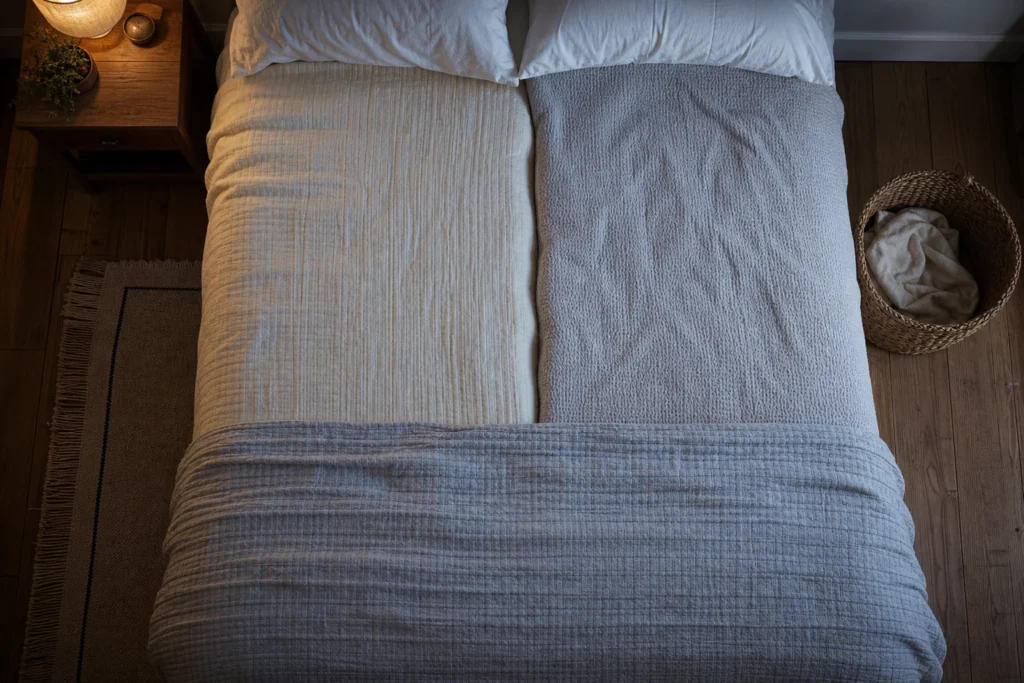
Sleeper A often feels warm. Sleeper B wants more weight. The washing machine cannot handle the current king-size heavy comforter.
Revised system:
- washable shared sheet and pillow base;
- two lighter single warmth layers with compatible care;
- B receives an extra washable blanket;
- one lightweight coverlet crosses the lower third for visual unity and can be removed easily;
- decorative cushions reduce from six to two;
- a breathable basket receives the coverlet at night;
- winter warmth is added through modular layers that fit the laundry plan.
The bed has fewer objects and more possible settings.
Buy by failure mode
Buy by failure mode
Name the discomfort before shopping
- Too hotReduce trapped warmth; improve adjustability.
- Too coldAdd a reachable layer where warmth escapes.
- Twisted by morningSimplify the stack or give each sleeper a layer.
- Laundry backlogChoose smaller, washable components.
- Looks unfinishedStrengthen one large colour relationship, not five cushions.
If the bed is too warm, do not automatically buy “cooling” bedding. Identify whether the issue is room temperature, main fill, weave, multiple trapped layers or individual need.
If it looks flat, add contrast through texture, scale or edge—not necessarily more volume.
If it is hard to make, reduce full-width layers and pillow count.
If washing is avoided, choose components the household can actually clean.
If one person steals the cover, split the adjustment layer.
If decorative textiles live on the floor, give them an address or remove them.
Make the bed from the hardest side
Stand where the bed is closest to a wall, wardrobe or window and remake it from there. A deep stack of heavy layers may look manageable from the open side but become a weekly wrestling match in a tight room. If a layer repeatedly touches the floor while being pulled into place, simplify the stack or change the bed position.
Give removed night-time layers a real landing. The floor is not a neutral surface, and a decorative bench is not useful if it blocks the walking route. A wall hook rated and installed for the load, a breathable basket, a clear chair, or one side of a wardrobe may work—provided the textile is dry and the route stays open.
The visual finish should survive the landing. If the bed only feels complete while six pillows occupy the sleeping area, decide where all six live at night. Often one supportive pillow arrangement and one intentional colour relationship create a stronger room than a daily pile transfer.
Keep the care information with the combination
Photograph labels before they fade or become awkward to reach. Record fibre content, care instructions, and which insert belongs to which cover. If two similar white components require different handling, a small private note is more useful than trying to remember after a spill.
Do not promise performance from fibre name alone. Weave, fill, construction, finish, weight, climate, and the individual sleeper all change how a textile feels. Test a pillowcase, small blanket or returnable item when possible, and use the manufacturer’s care instructions.
Do a one-week climate note before replacing the whole bed: room temperature, which layer was removed, which was pulled closer, and what created laundry. The pattern will tell you whether you need more warmth, more adjustability, a smaller wash load, or simply fewer layers.
Useful next action
Photograph every current layer and its care label. Mark each base, warmth, adjustment or visual. If two layers have the same job but neither is easy to maintain, edit before buying.
About the visuals in this guide
These are original Dealsmaster editorial illustrations produced with AI assistance for explanation and inspiration. They do not document a real household, tested installation, reader result, or professional inspection.
Sources and limits
Useful advice should show its working
Material claims were checked against the primary guidance below. Dealsmaster dimensions and layouts are editorial planning starting points, not universal codes, professional assessments, or product instructions. Local rules, tenancy terms, building conditions, user needs, and manufacturer guidance control.
- U.S. Federal Trade Commission — Textile and Wool LabellingFibre-content labelling context, including bedding products.
- U.S. Federal Trade Commission — Clothing and TextilesBroader textile-labelling guidance; product-specific labels still control care.
Disclosure: This guide contains no affiliate links, sponsorship, or claimed product testing. Constructed examples are planning examples, not reported Dealsmaster households.